How Does the Digitization of Information Change How We Think? Putnam mentions in her article how digitized databases allow researchers to save time when completing research, but these databases may actually limit the type of research historians are conducting. Will historians be drawn to conduct research based solely on how easily certain information can be found using keyword searches, versus taking the time to find out about other information in their field?
The term shadows I really enjoy the idea of using the term “shadows” to describe how digitization changes the access to research information online compared to what continues to exist today. As you digitize documents or photos of people, you bring more history online for everyone to see. However, there are many people/groups that have no way to digitize their history or have not yet had their history digitized. Who gets to choose which items from which communities will be digitized? What happens to those stories that we cannot see because they have not been digitized?
Does the Digital World Make History More Global? Putnam discusses the notion that digital archives provide historians with a place to conduct transnational research. However, I do not believe there is a direct cause/effect relationship between having access to digital archives and creating a greater understanding of the world on a global scale. Will digital access to documents make the information on these documents more connected to one another, or will digital access simply create an appearance of greater connection via the documents being on the same platform?
Local vs. National – The Battles Between Local/Regional Histories and National Histories Putting aside the enormously important battle to preserve Black history in St. Louis, how do you think local history communities are working with or against national institutions such as the Smithsonian? Do you think that maintaining local histories without the influence of national institutions is still more valuable than digitizing local histories with the assistance of national institutions?
Access and Inequality Both of the articles talk about access. While digitization of archives enables history to be available for more people, there are still limitations based on money and technology. I want to explore if digitizing makes it possible for all people to enjoy history in equal fashion, or is it just transferring power to those who already have resources?
– For the first time, historians can find without knowing where to look. As a result, at an unprecedented rate we are finding connections in unexpected places…
– “It’s not the destination, it’s the journey” – Ralph Waldo Emerson (American philosopher)
We risk overemphasizing the importance of that which connects, and underestimating the weight of that which is connected: emplaced structures, internal societal dynamics.
I seek to offer something equally simple: the suggestion that we could not be doing what we are, at the pace that we are, with the range that we are, if it were not for the search box before us.
Google Books allowed me—in the space of three minutes at my desk, rather than a day at the library—to find out enough about African American showman William Benbow to know that I wanted to know more.
The podcast is the exact counterpoint to the Lara Putnam article. It emphasizes the importance of technology to fight against erasure of history. You can complain about having too much/too easy of access to history/fact/sources, but you can’t overstate the devastation of history being lost forever.
In Jorge Luis Borges The Library of Babel and E. Lily Yu’s In the Forests of Memory, AI is not portrayed as a typical robot or villainous machine. Instead, both works focus on information, memory, and the way technology reshapes how humans understand themselves. When read together, they suggest that AI is less about machines taking over and more about how humans deal with overwhelming amounts of data and emotional attachment.
In The Library of Babel, Borges imagines an infinite library that contains every possible combination of letters. This means it includes all true knowledge, all false knowledge, and everything in between. The people living in the library spend their lives searching for meaning, often becoming obsessed or hopeless. Borges seems to assume that simply having access to all information does not guarantee wisdom. In fact, too much information can create confusion and despair. When I read this story, I couldn’t help but think about the internet and modern AI systems. Today, we have access to more information than ever, but it is still difficult to find truth among misinformation. Borges’ vision feels like a warning about what happens when knowledge becomes endless but not necessarily understandable. On the other hand, Yu’s In the Forests of Memory presents a more emotional perspective. In the story, a grieving mother uses technology to reconstruct her deceased daughter from digital data. The AI version of the daughter can speak and respond, but it is ultimately a simulation built from past messages and online traces. Yu assumes that identity might be reducible to data, but she also questions whether that is enough to truly recreate a person. The story suggests that AI can imitate personality, but imitation is not the same as consciousness. This raises ethical questions about grief, memory, and whether technology should be used to preserve people after death.
Both works argue that AI reflects humanity rather than replacing it. Borges shows how humans project faith and desperation onto systems of information. Yu shows how humans project love and longing onto digital recreations. In both cases, the AI or system does not have its own desires; instead, it amplifies human emotions and beliefs.
From my perspective as a computer science student, these stories connect strongly to modern AI tools. Today’s AI models do not truly understand the world, they analyze patterns in large datasets and generate responses. This is like Borges’ idea of recombining letters endlessly. At the same time, people are already experimenting with AI chatbots that simulate deceased loved ones, which makes Yu’s story feel very realistic. Together, these works suggest that the real question is not whether AI can think like humans, but whether humans are ready for technology that mirrors them so closely.
For AI fiction, I read The Pedestrian by Ray Bradbury. I really enjoyed this very short story about a sad and seemingly lonely world where everyone is shut away in their homes. I would start this review off by saying the creator of this story assumes that as we progress in our technology, humans will become less social and dependent on one another and instead become more infatuated with their televisions and technology in general. I also think he assumes that most humans will be okay with this future, as in the story only one person is seen stepping away from this technology for a normal walk outside. I think it’s also safe to say the creator of this story believes that technology will advance to a point where it takes over complete jobs such as police officers, and that crime will be able to be controlled by just one AI car. I think the creator is making an argument that people and technology have a toxic relationship that might make things easier, but not necessarily better.
The AI in this story is a vision of AI that is cold and calculating, while also being too robot to think rationally and human like. It shows AI as a machine that does not quite understand everything and instead makes generalized assumptions. The fictional AI in this story relates to my experience of AI as I can see that same type of assumptive nature in my own usage of online AI chatbots. Ai is clearly able to make some correct choices, but it seems to still need some supervision or an operator so that it can have a human perspective. I feel like the author is trying to show that we cannot let technology and AI dictate human life, and that seems to be where we are going.
The reading for Feb. 18th is an academic article, and it’s a little more dense and jargony than usual. You don’t need to understand every detail! Come prepared with questions, areas that were confusing or difficult, and anything else you’d like to talk through.
To prepare for discussion, compile a Top 5. This should be a bulleted list of the top five ideas, topics, questions, or quotations you would like to discuss in class. Your list should demonstrate your engagement with the reading. The Top 5 assignment should help you engage with the reading and come to class prepared to share your ideas. A quality Top 5 will do more than summarize the text. It will provide you with a set of topics, questions, and quotations to discuss in class.
The first story I read was “The Pedestrian” by Ray Bradbury. Overall, this was a very interesting read about how normal human behavior could be different in the future. The main protagonist goes about his daily routine. Later that night, he decides to go on one of his nightly walks out in the street. Not long after, he is strolling down the street when he is stopped by high beams and the sound of a megaphone questioning everything about him. His name, his occupation, and even why he is walking in the first place. He is then asked to get into the police vehicl which has no one in it. It is implied that he was then taken to a psychiatric institution of some kind for treatment. It is rather interesting how the timeline creates this sense of futuristic technology, but also this sense of apocalyptic dread. Like, why are other people not out in the street? Why does the self-driving police car think there is something wrong with a man who wants to go for a walk? Overall, a story I would have liked to have seen carried further. I see this relating to the use of AI in today’s society. Just as the main character of this story is nervous about the driverless cop, people are nervous about the control that AI could and will have on today’s world.
The second story I read was “When Robot and Crow Saved East St. Louis” by Annalee Newitz. This is a story about a robot that was created by the CDC, but unfortunately has been abandoned. The robot no longer gets any orders for updates from the CDC, so it does everything it can to help get samples of people who are potentially ill. The robot goes from door to door to see several people. Some dismiss the machine almost instantly, and others ask questions or follow the program that this robot requests. I think this goes to show how the rise and fall of new or old technology can majorly affect people’s trust in it. Not everyone is as open to new things as others. People need time to accept change and adapt to how technology plays a role in the world we know today.
Ray Bradbury and E. Lily Yu both dive into a futuristic world where technology is different from the one we have today. Both, “The Pedestrian” and “In the Forests of Memory,” are set in a somewhat sad, slightly dystopian kind of future. There isn’t anything threatening the existence of mankind like killer robots or spaceships but the soul of humanity seems to be dim.
In “The Pedestrian”, Bradbury walks us through a world where absolutely every family and individual is glued to a television screen inside their home. The police force is greatly reduced which is proportional to the amount of crime there is in the world. Is a world with almost non-existent crime a better one at the cost of people losing their will to be outside?
E Lily Yu gives us “In the Forests of Memory,” where the essence of people seem to be recorded in a 3D version at their tombstones with realistic features and responses. Their voices and faces are all pre-recorded but there are still graves which are visited. There’s still forgotten digital memories with no one to talk to even if their next of kin are still living. One might think that the ability to see a loved one who passed away might fill a cemetery more than before but that’s not true.
In both of these stories technology and AI was supposed to bring us closer together and give us free time to do what we wanted. In “The Pedestrian”, the families are all cooped up in their little house with the glare of a screen reflected on their face but it doesn’t necessarily mean they’re spending quality meaningful time. Yu’s character is almost a ghost in the modern world due to the empty echoes and interactions it’s filled with.
Today we see ourselves constantly updating technology and giving away “busy” work to computers. We’re behind screens more and more per day and there doesn’t seem to be an end to it. AI and technology do solve many problems and help us advance but there is always a cost.
I chose “The Pedestrian” by Ray Bradbury and “In the Forests of Memory” by Lily Yu to read and analyze. Both stories have a very similar feeling to them and follow a similar pattern. Both creators write about an advancement in technology in the future and how humanity might become with technology advanced in these ways.
With how it develops in “In the Forests of Memory”, Sunny spends her time talking to projections of people who have been lost, but they only have so much responsiveness and are only projections in the end. The projections are also meant for the family of the lost. In the end, with having no one who remembers her, this shows the hollowness of the relationships with technology and AI. It can mimic humanity, but it cannot replace it. She also does not get a projection herself because of limited money, this also emphasizes the idea of this advanced technology as a product, not something to help humanity, but something to sell and please those better off. The advanced technology in the story does not balance society or help those who are poor and lonely, but the opposite. A lot of this reflects how technology and AI works right now. Like the false idea that the AI projections mimic real connections, many people become dependent on AI or try to mimic humanity and human connection with it. The way we distribute technology works the same way too, not to those who use or need it, but as a product to those who can afford it. Some people say this could help people who have less resources, but in the end there are many ways that this hurts those people.
In “The Pedestrian”, Bradbury feels like he’s making some similar statements. Instead of AI projections, there is no one for the character to talk to as he roams the street. People are still replacing human connection with technology in this story, but by staying in with their screens. The only interaction the character has is with an AI cop car. This AI cannot understand the human because of him acting differently than expected. This again shows how technology can limit humanity instead of progressing it. Both stories show impressive technology and AI, similar but much farther than what we’ve recently developed, and show us similar issues we can already see today with what we have now. This technology is impressive and can move humanity forward in some ways, but there are many ways it is distributed and used dangerously and unfairly, and can be forced upon us at times.
Review of the Nine Billion Names of God by Arthur C. Clarke:
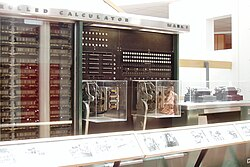
The Automated Sequence Computer is designed for complex numerical calculation, but it does not perform word processing or text-based manipulation. In this passage, we see that the lama (spiritual leader in Tibetan Buddhism) wants the automated sequence computer to perform a task it is not designed for, which is manipulating text (letters). With modification of the output circuit the machine will be printing columns of words, rather than numbers. The aim was to compile a very long list in a short period of time. This list was meant to take thousands of years to complete. In this short story, the author made us see how computer can be manipulated to meet the needs and imagination of man. Even though, the main purpose of the sequence machine is primarily for numerical calculation, it would later be modified to meet other’s needs (text-based) in the passage.
In this passage we would also see that the intent or reason behind some creation is not always what we expect it to be. On surface level it may seem good, but deep down it may not be as ethical as we hope it would be. In the story, we see dr Wagner asking the lama for the purpose of his project, the answer wasn’t concrete, it was simple based on religious beliefs. We would later see, that it was meant to manipulate people into thinking that the rapture would take place after the last nine billionth name of God has been read. It may sound trivial, but this could be a serious issue. Like George said, he had similar experience as a child in Louisiana and a lot of people sold their homes. In this case, the two programmers where scared what would happen if things didn’t go the way the lama wanted? Would their computer be blamed for it or not? People can be unpredictable and shift blames when things don’t go their way. Today, the use of technology is blamed for a lot of the ills in the society, when really the people using it is the real problem.
In this passage, we see that the vision of AI or computer technology has no limit. It is unimaginable. We just have to think and then it does what we want it to do. In my experience, technologies branded as AI can be beneficial depending on what it is written or created for.
There are times when we experience bugs in a program which can cause disruption, but when corrected (maintained) the issue is resolved. So, the problem is really not the program, it is the people writing the program and their intention.
Computers do not have minds of their own, they are controlled and manipulated by human beings.
Review on the Ones Who Look by Katherine Duckett:
In this story, a technological system is built to help or guide people into doing right, so they can have a special place in heaven. This system is based on points. When you do something deemed as ethically wrong you lose some points. When logged out of the application, you lose some points. Everyone on the app is assigned two angels that guide them when they are about to make decisions that may cost them points. The creator assumes a world where people are indirectly controlled by the technology or AI system they trust. They build their behavior and actions on what the technology tells them is morally ethical, in order to gain enough points to gain access to a place in heaven when they die.
The interesting part of this story is, this technology is built by a man (Boltzmann) who makes a lot of money from this technology. This can be seen where it says, the Empire’s wealth exceeded the GDP of a good percentage of the world’s countries. The empire uses the testimonials of rich and famous celebrities from the afterlife to encourage others around the world to sign-up. This ethical empire created has become so big that it becomes difficult to bring it down. This can be seen when Zoe realized the truth about the empire. Henri said, “Stop Boltzmann, and someone else will take his place”. This is similar to the world we live in now; AI technology has gotten to a level where it becomes difficult to stop it. The revolution to help people live right and make heaven might have been from a good place when the thought was first conceived, but it turned out to be all lies and deception. The heaven people hoped for doesn’t even exist as it was broken from the beginning according to the story. The people were still made to believe that the system works, probably because the founder wants to keep making money. People were encouraged to sign-up, live right (follow ethical moral standards) and earn more points to gain access to a place in heaven.
In this story, we see that people can easily become manipulated by the technology/AI they use. This shows that technology could get to a point where it becomes highly manipulative to the level where people depend on it for everything, like we see in the story and also in reality. Zoe for example felt more comfortable when her device was on and she has her angels around her, even though she doesn’t follow most of the advice they give her. A lot of other people in the story also left their device on, even when in the process of doing what is deemed as wrong.
The vision of AI presented in this story is one of indirect manipulation and deception. It looks good at first glance but then controlling. Also, the mind or intent behind the creation cannot be overlooked. Most of this creation usually starts from a good place but then they have their cost, like Henri said, “Every revolution has its cost”.
In my experience with AI tools, a lot of them can be really useful (helpful) especially those used for educational purposes. Although, there are also some which have been known to cause harm to people.
We cannot completely rule AI off, but with proper regulation and more work it would be safer and better for everyone’s use.
The Cahokia app is an innovative tool that helps the modern audience experience the ancient Cahokia Mounds site in new way. The app has features such as augmented reality which allows people visiting to see digital reconstructions of buildings, ceremonies, and everyday life while they walk through the historic grounds. With the new digital display, people get to experience history in a new interactive and meaningful way.
A big strength of this app is how it enhances accessibility for general visitors. The Cahokia app allows people who were before unaware or uneducated about indigenous history or archaeology to learn and understand what the site once looked like. Instead of trying to imagine what the past used to look like people can now look through their device to see reconstructed scenes of what it used to look like making it easier to comprehend the reality of the past. This app is especially helpful for students, tourists, and people who benefit from visual learning.
Although the app is a very good learning tool, it is not equally accessible to everyone. In order to have this app you would need to have a phone or tablet and be comfortable with using technology. This would exclude people who do not own these devices from the same learning experience.