Author: whernan
Ray Bradbury and E. Lily Yu both dive into a futuristic world where technology is different from the one we have today. Both, “The Pedestrian” and “In the Forests of Memory,” are set in a somewhat sad, slightly dystopian kind of future. There isn’t anything threatening the existence of mankind like killer robots or spaceships but the soul of humanity seems to be dim.
In “The Pedestrian”, Bradbury walks us through a world where absolutely every family and individual is glued to a television screen inside their home. The police force is greatly reduced which is proportional to the amount of crime there is in the world. Is a world with almost non-existent crime a better one at the cost of people losing their will to be outside?
E Lily Yu gives us “In the Forests of Memory,” where the essence of people seem to be recorded in a 3D version at their tombstones with realistic features and responses. Their voices and faces are all pre-recorded but there are still graves which are visited. There’s still forgotten digital memories with no one to talk to even if their next of kin are still living. One might think that the ability to see a loved one who passed away might fill a cemetery more than before but that’s not true.
In both of these stories technology and AI was supposed to bring us closer together and give us free time to do what we wanted. In “The Pedestrian”, the families are all cooped up in their little house with the glare of a screen reflected on their face but it doesn’t necessarily mean they’re spending quality meaningful time. Yu’s character is almost a ghost in the modern world due to the empty echoes and interactions it’s filled with.
Today we see ourselves constantly updating technology and giving away “busy” work to computers. We’re behind screens more and more per day and there doesn’t seem to be an end to it. AI and technology do solve many problems and help us advance but there is always a cost.
The Cahokia VR App allows users to view the Cahokia Mounds as they once used to look like when they were occupied by the Mississippians. The app does really well at including 3D models to really make you feel like you’re there a thousand years ago. It allows those that are able to make the trip to the mounds an ability to experience this ancient site like never before. Unfortunately, it does exclude audiences with mobility disabilities. According to the video, you need to scale certain mounds and scan the code on the signs in order to view Augmented Reality. The mounds either don’t have any means of getting up or they just have stairs which restricts many to just viewing from the ground level.
Running the SIUE Engineering Board website through WAVE, I found several issues that were detected. There’s an Empty Link Error, 2 Contrast Errors, and 10 Alerts where very low contrast, small text and redundant links are the biggest issues. Engineering students, staff, or alumni are most likely to use the content on this page in order to contact Advisory Board members. The most impacted would be anyone trying to use it and trying to reach a contact link for a member but it’s an empty link. Redundant links seem to be prominent so compacting them all into one spot would help.
The world’s first nuclear reactor is currently buried in a forest preserve in Chicago. I stumbled upon it when I was in High School during a land-navigation competition where we had to find points in the forest using a compass and map. Through one of those runs my buddy and I saw this weird rock in the middle of nowhere with writing on it and eerily enough it said there was radioactive material buried underneath us. That made us go “WHY WOULD THAT BE HERE???”, it felt like a nuclear bomb should’ve been stored at least hundreds of miles away from any city. After reading the description and doing some light research afterwards we found out that the park was the site of University of Chicago’s nuclear reaction testing and wasn’t dangerous at the depth it was buried. I’m sure we couldn’t have been the first or the last to have their hearts drop as soon as they stop to see the funny rock with a paragraph.
I’m really looking forward to the week 6 and week 14 reading involving St. Louis history and COVID-19. I moved to the St. Louis area about a year ago and I’ve had a lot of fun learning more about local history such as the World’s Fair, Forest Park, and Cahokia Mounds. There’s so much history all over the city and I’m always excited to learn more about where I live now.
COVID-19 was a worldwide event and hearing about other people’s perspectives from different regions is always interesting. It affected everyone in unique ways from having to change our work culture, school culture and just everyday life. Some people had doomsday preparations with bunkers, others had financial backup plans to work from home and some were already self-sustainable with homegrown food and filtered water. It’ll be really interesting to explore how our personal culture might’ve been involved in these decisions through this class.
I’m active on Facebook, Instagram, and Discord for social media. On Facebook I’m not really speaking to anyone, just have it up to check on family posts every once in a while and using Marketplace to buy/sell stuff. Instagram is just used to watch funny videos and Discord to communicate with school clubs.
I don’t share much or post anything on my social media, really just my profile picture and occasionally a concert or an event on Instagram. I’d be comfortable sharing with the class pretty much what I post online already since I already was under the impression it’s public even if I don’t know who looks through it.
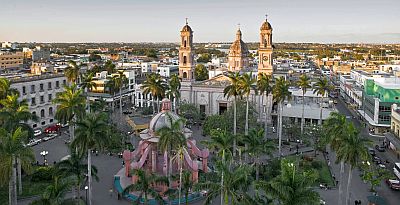
The image I’m using is from my parents’ hometown and where I enjoy spending summers when I get the chance to.