Author: poluseg

The Gateway Arch National Park

National parks in the United States are “large areas of iconic lands or waters with a variety of natural, cultural, scientific and historical resources” (Linda Coutant, 2023). Another author puts it this way, “National parks tend to be large swaths of land that protects a variety of resources, including natural and historic features” (U.S. Department of the Interior, 2026). These are large areas that preserves the country’s natural resource, and showcase the beauty of the land. A better way to put this is “national parks are America’s crown jewels, inspiring awe and wonder. When a tourist sees a national park, they should marvel at its beauty and be amazed. The purpose of a national park is to “protect the nation’s special places so current and future generations can experience our natural and cultural treasures for years to come” (U.S. Department of the Interior, 2026). Officially, there are sixty-three designated national parks in the United States. The two ways a site becomes a national park according to Linda Coutant (2023) is “through congressional action and presidential declaration using the Antiquities Act of 1906”.

The Gateway Arch is a national park in St. Louis Missouri. It was formerly known as the Jefferson National Expansion Memorial, intended to revitalize the riverfront and increase tourism in the city. The park extends from the Old Courthouse to the steps overlooking the Mississippi River. The design of the Monument was inspired by the architect Eero Saarinen between 1947 during a public design competition. The goal was to erect a monument to commemorate the western expansion and Thomas Jefferson’s role in sponsoring the Lewis and Clark Expedition, which departed from the St. Louis area in the 1800s. The construction of the Arch began in 1963 and was completed in October 28, 1965 (National Park Foundation). In July 2018, the park was changed from Jefferson National Expansion Memorial to Gateway Arch National Park (https://www.gatewayarch.com/about/arch-history/). The park was redesignated by Congress, making it the 60th and smallest national park at 91 acres.

One of the things that makes the Gateway Arch national park unique is its arch. The Gateway Arch is 630 feet tall, making it the tallest human-made accessible structure in Missouri. It is also the tallest Arch in the entire Western Hemisphere. The Arch’s support goes 60 feet underground, making it able to withstand earthquake and strong winds. Located west of the Arch is the old courthouse, which is the oldest standing building in St. Louis. The first two trials of the Dred Scott case were held in old courthouse in 1847 and 1850. The Gateway Arch also has an underground museum which houses the history of the city.

Though, with the knowledge we have about national parks and the requirement needed to name a site national park, we would see that the Gateway Arch does not fit into that category. The Department of the interior had this to say to congress, “to better align with the standard nomenclature for units of the National Park System, we recommend that Congress redesignate the unit as Gateway Arch National Monument”. This is because national parks are a lot vaster, with a variety of resources and covers large land or water areas to provide enough protection of the resources. Of the 60 national parks, the Gateway Arch is the smallest, with no natural resources, or scientific significance to it. Although, one might argue that it houses the cultural and historical values of the city, like the old courthouse where the first two trials of the Dred Scott case took place. It was also the place where Virginia Minor’s case for a woman’s right to vote came to trial in the 1870s (https://www.nps.gov/jeff/planyourvisit/och.htm). There is no substantial article that really states the congress’ reason for the change of the site’s name. But in the Gateway Arch Park Foundation site, we are made to understand part of the reason for the change is to encourage tourist and provide more accurate marketing communication. After the change of name in 2018, there have been a rise in tourist visitation to the area. According to Jeremy Sweat, Superintendent of Gateway Arch National Park, “we are pleased to see such strong visitation in 2023”. This shows that changing the name helped in attracting tourist to the city, which in turn will improve the city’s revenue.

In conclusion, a National Park in the United States is a vast area that encompasses large land or water areas with a variety of natural, cultural, scientific and historical resources. The Gateway Arch National Monument was changed to Gateway Arch National Park in 2018 by congress. Although, it may not fit the criteria of a national park, it houses the cultural and historical values of the land. It is also a tourist site that has attracted more tourist since the name change, which has helped the city’s revenue.

Technology used is Scrolly Storytelling tool: https://preciousolu01.github.io/gateway-arch-project/

References

  1. Gateway Arch National Park Purpose and Significance. https://www.nps.gov/jeff/learn/news/gateway-arch-national-park-purpose-and-significance.htm
  2. Renninger, Von P. 2024. The Curious Case of Gateway Arch – or: National + Park=National Park? https://www.umweltimrecht.blog/gateway-arch/
  3. Kennicott Philip. 2018. “50 years later, St. Louis’s Gateway Arch emerges with a new name and a skeptical view of western expansion”. https://www.washingtonpost.com/entertainment/museums/50-years-later-st-louis-gateway-arch-emerges-with-a-new-name-and-a-skeptical-view-of-western-expansion/2018/06/25/7cbee8d6-644d-11e8-99d2-0d678ec08c2f_story.html
  4. U.S. Department of the Interior. “America’s Public Lands Explained. March 2026. https://www.doi.gov/blog/americas-public-lands-explained
  5. Coutant Linda. National Parks Conservation Association. ‘How National Parks and Monuments Are Designated”. July 2023. https://www.npca.org/articles/3359-how-national-parks-and-monuments-are-designated
  6. National Park Foundation. “Gateway Arch National Park”. https://www.nationalparks.org/explore/parks/gateway-arch-national-park
  7. Missouri State Symbol https://www.sos.mo.gov/symbol/monument#:~:text=The%20Gateway%20Arch%20is%20perhaps,Gov.
  8. “Gateway Arch”. https://www.npca.org/parks/gateway-arch-national-park?gad_source=1&gad_campaignid=687842311&gbraid=0AAAAAD4GDtnDPkzYImXFY_6_4G02IeCM2&gclid=Cj0KCQjwqPLOBhCiARIsAKRMPZpbgUvYmk-ncoJ4a4hUvz2skyjn3mHEy3qVR227ocFHIPD7GDXhEOUaAmfhEALw_wcB
  9. Explore The Gateway Arch’s History. https://www.gatewayarch.com/about/arch-history/
  10. Old Courthouse. https://www.nps.gov/jeff/planyourvisit/och.htm
  11. Gateway Arch National Park sees 2.4 million Visitors in 2023. https://www.nps.gov/jeff/learn/news/gateway-arch-national-park-sees-2-4-million-visitors-in-2023.htm
  12. Gateway Arch National Park Designated New Name for Park. https://www.archpark.org/updates/news/gateway-arch-national-park-designated-new-name-for-park

St. Louis Regional Data Exchange (RDX)

How Did They Make That?

This project was built by the St. Louis Regional Data Alliance. It got help from key players like Daugherty Business Solutions, who played a crucial role assisting in data aggregation. Missouri Foundation for Health also helped to provide essential funding for this project. It took two years to develop the project. The initiative was built upon a previous effort that began roughly seven years prior. This project was made using DKAN Open Data Platform. DKAN is a powerful, community-driven open data platform that has been at the forefront of data accessibility and transparency for over a decade. It enables organizations and individual build open data portals in Drupal.

The goal of this project is to be a one stop shop. That is, a place where people can search for any public community data in St. Louis. People can find data on local government and nonprofit websites or upload information onto the RDX directly. The intended audience are local governments, community members, nonprofits, activists and academics.

One of the strengths is the layout. It is well organized and easy to navigate. It uses contrasting colors which makes it easy for people to read.

One of the weaknesses of this site is the inability to add data when you click on the “Add Data” button. It tells you to email them or fill out the google form, not every would want to go through the hassle of doing that. Another weakness is it doesn’t give you all the information needed on a particular topic. For example, when I tried to check for a list of officially elected leaders in the area, I didn’t get any meaningful result.

After making this project, the researcher must have learned about different sectors and areas in St. Louis. Also, may have learned about a new technological tool DKAN, a powerful open-source tools for publishing and cataloging datasets and their metadata. This can be seen in the way the home page was neatly organized and arranged for easy accessibility.

Reflecting on this site, I got to learn about a new technology DKAN which could be an interesting tool for creating contents that needs catalogs. I also think the Regional Data Exchange has potential, as it could be a site to easily search for relevant information.

Illinois Landcover in the Early 1800s

This project was sponsored by the Illinois Department of Natural Resources and Illinois Natural History Survey. The Illinois Department of Natural Resources (IDNR) is a state agency responsible for managing, conserving and protecting Illinois’ natural, recreational and cultural resources. The Illinois Natural History Survey (INHS) is a premier scientific research organization; it is part of the Prairie Research Institute at the University of Illinois Urbana-Champaign. Since 1858, they have been the guardian and recorder of the biological resources of Illinois-state’s biological memory. According to their manifesto, their mission is to “investigate the diversity, life histories and ecology of the plants and animals of the state; to publish result so that those resources can be managed wisely” (https://inhs.illinois.edu/about/about-inhs/).

The source of the data are plat maps and field notebooks that contained details about the survey, as well as notes that have the quality of the landscape, mines, salt lick, watercourses, springs, mill seats and other “remarkable and permanent things”.

The data was used by Surveyors and Cartographers to create a more complete map of the township. It was also used by the Illinois Natural History Survey to create the Early 1800’s land cover map. The format of the data set is in digital vector coverage (shapefiles/geodatabase) representing forests, prairies and wetlands, managed by the Illinois Natural History Survey.

The data wasn’t made available in this case, although the land code value was provided with definitions of some keywords in a tabular format.

A few data clean ups were made. Areas that were mislabeled were corrected, areas that were mis-digitized and had incorrect label had the missing line added and the labels corrected. The effect this cleanup has on the data is clarity, accuracy and trust. For example, the present-day Adams County, a prairie area was mis-digitized and incorrectly labeled as forest. This can cause confusion and misrepresentation, but correcting the data made it more presentable and understandable to anyone with access to that information, making it possible for people to trust the data from the creators.

The goal of creating the data is one of preservation, fostering public understanding and appreciation of resources, safety of natural resources for present and future generation. This might have shaped the data in making sure it is more detailed and accurate.

I could use the data to learn and analyze the soil nutrient composition, health and contamination level of a particular area.

The Gateway Arch National Park

The Gateway Arch National Park St. Louis

National parks in the United States are “large areas of iconic lands or waters with a variety of natural, cultural, scientific and historical resources” (Linda Coutant, 2023). Another author puts it this way, “National parks tend to be large swaths of land that protects a variety of resources, including natural and historic features” (U.S. Department of the Interior, 2026). These are large areas that preserves the country’s natural resource, and showcase the beauty of the land. A better way to put this is “national parks are America’s crown jewels, inspiring awe and wonder. When a tourist sees a national park, they should marvel at its beauty and be amazed. The purpose of a national park is to “protect the nation’s special places so current and future generations can experience our natural and cultural treasures for years to come” (U.S. Department of the Interior, 2026). Officially, there are sixty-three designated national parks in the United States. The two ways a site becomes a national park according to Linda Coutant (2023) is “through congressional action and presidential declaration using the Antiquities Act of 1906”.

The Gateway Arch is a national park in St. Louis Missouri. It was formerly known as the Jefferson National Expansion Memorial, intended to revitalize the riverfront and increase tourism in the city. The park extends from the Old Courthouse to the steps overlooking the Mississippi River. The design of the Monument was inspired by the architect Eero Saarinen between 1947 during a public design competition. The goal was to erect a monument to commemorate the western expansion and Thomas Jefferson’s role in sponsoring the Lewis and Clark Expedition, which departed from the St. Louis area in the 1800s. The construction of the Arch began in 1963 and was completed in October 28, 1965 (National Park Foundation). In July 2018, the park was changed from Jefferson National Expansion Memorial to Gateway Arch National Park (https://www.gatewayarch.com/about/arch-history/). The park was redesignated by Congress, making it the 60th and smallest national park at 91 acres.

One of the things that makes the Gateway Arch national park unique is its arch. The Gateway Arch is 630 feet tall, making it the tallest human-made accessible structure in Missouri. It is also the tallest Arch in the entire Western Hemisphere. The Arch’s support goes 60 feet underground, making it able to withstand earthquake and strong winds. Located west of the Arch is the old courthouse, which is the oldest standing building in St. Louis. The first two trials of the Dred Scott case were held in old courthouse in 1847 and 1850. The Gateway Arch also has an underground museum which houses the history of the city.

Though, the Gateway Arch may not have natural resource or scientific significance, it houses the cultural and historical values of the city. It was also designated by the United States Congress.

Technology: Scrolly Story (https://preciousolu01.github.io/gateway-arch-project/)

References

  1. Gateway Arch National Park Purpose and Significance. https://www.nps.gov/jeff/learn/news/gateway-arch-national-park-purpose-and-significance.htm
  2. Renninger, Von P. 2024. The Curious Case of Gateway Arch – or: National + Park=National Park? https://www.umweltimrecht.blog/gateway-arch/
  3. Kennicott Philip. 2018. “50 years later, St. Louis’s Gateway Arch emerges with a new name and a skeptical view of western expansion”. https://www.washingtonpost.com/entertainment/museums/50-years-later-st-louis-gateway-arch-emerges-with-a-new-name-and-a-skeptical-view-of-western-expansion/2018/06/25/7cbee8d6-644d-11e8-99d2-0d678ec08c2f_story.html
  4. U.S. Department of the Interior. “America’s Public Lands Explained. March 2026. https://www.doi.gov/blog/americas-public-lands-explained
  5. Coutant Linda. National Parks Conservation Association. ‘How National Parks and Monuments Are Designated”. July 2023. https://www.npca.org/articles/3359-how-national-parks-and-monuments-are-designated
  6. National Park Foundation. “Gateway Arch National Park”. https://www.nationalparks.org/explore/parks/gateway-arch-national-park
  7. Missouri State Symbol https://www.sos.mo.gov/symbol/monument#:~:text=The%20Gateway%20Arch%20is%20perhaps,Gov.
  8. “Gateway Arch”. https://www.npca.org/parks/gateway-arch-national-park?gad_source=1&gad_campaignid=687842311&gbraid=0AAAAAD4GDtnDPkzYImXFY_6_4G02IeCM2&gclid=Cj0KCQjwqPLOBhCiARIsAKRMPZpbgUvYmk-ncoJ4a4hUvz2skyjn3mHEy3qVR227ocFHIPD7GDXhEOUaAmfhEALw_wcB
  9. Explore The Gateway Arch’s History. https://www.gatewayarch.com/about/arch-history/

AI Fiction

Review of the Nine Billion Names of God by Arthur C. Clarke:

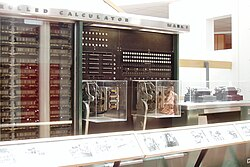
The Automated Sequence Computer is designed for complex numerical calculation, but it does not perform word processing or text-based manipulation. In this passage, we see that the lama (spiritual leader in Tibetan Buddhism) wants the automated sequence computer to perform a task it is not designed for, which is manipulating text (letters). With modification of the output circuit the machine will be printing columns of words, rather than numbers. The aim was to compile a very long list in a short period of time. This list was meant to take thousands of years to complete. In this short story, the author made us see how computer can be manipulated to meet the needs and imagination of man. Even though, the main purpose of the sequence machine is primarily for numerical calculation, it would later be modified to meet other’s needs (text-based) in the passage.

In this passage we would also see that the intent or reason behind some creation is not always what we expect it to be. On surface level it may seem good, but deep down it may not be as ethical as we hope it would be. In the story, we see dr Wagner asking the lama for the purpose of his project, the answer wasn’t concrete, it was simple based on religious beliefs. We would later see, that it was meant to manipulate people into thinking that the rapture would take place after the last nine billionth name of God has been read. It may sound trivial, but this could be a serious issue. Like George said, he had similar experience as a child in Louisiana and a lot of people sold their homes. In this case, the two programmers where scared what would happen if things didn’t go the way the lama wanted? Would their computer be blamed for it or not? People can be unpredictable and shift blames when things don’t go their way. Today, the use of technology is blamed for a lot of the ills in the society, when really the people using it is the real problem.

In this passage, we see that the vision of AI or computer technology has no limit. It is unimaginable. We just have to think and then it does what we want it to do. In my experience, technologies branded as AI can be beneficial depending on what it is written or created for.

There are times when we experience bugs in a program which can cause disruption, but when corrected (maintained) the issue is resolved. So, the problem is really not the program, it is the people writing the program and their intention.

Computers do not have minds of their own, they are controlled and manipulated by human beings.

Review on the Ones Who Look by Katherine Duckett:

In this story, a technological system is built to help or guide people into doing right, so they can have a special place in heaven. This system is based on points. When you do something deemed as ethically wrong you lose some points. When logged out of the application, you lose some points. Everyone on the app is assigned two angels that guide them when they are about to make decisions that may cost them points. The creator assumes a world where people are indirectly controlled by the technology or AI system they trust. They build their behavior and actions on what the technology tells them is morally ethical, in order to gain enough points to gain access to a place in heaven when they die.

The interesting part of this story is, this technology is built by a man (Boltzmann) who makes a lot of money from this technology. This can be seen where it says, the Empire’s wealth exceeded the GDP of a good percentage of the world’s countries. The empire uses the testimonials of rich and famous celebrities from the afterlife to encourage others around the world to sign-up. This ethical empire created has become so big that it becomes difficult to bring it down. This can be seen when Zoe realized the truth about the empire. Henri said, “Stop Boltzmann, and someone else will take his place”. This is similar to the world we live in now; AI technology has gotten to a level where it becomes difficult to stop it. The revolution to help people live right and make heaven might have been from a good place when the thought was first conceived, but it turned out to be all lies and deception. The heaven people hoped for doesn’t even exist as it was broken from the beginning according to the story. The people were still made to believe that the system works, probably because the founder wants to keep making money. People were encouraged to sign-up, live right (follow ethical moral standards) and earn more points to gain access to a place in heaven.

In this story, we see that people can easily become manipulated by the technology/AI they use. This shows that technology could get to a point where it becomes highly manipulative to the level where people depend on it for everything, like we see in the story and also in reality. Zoe for example felt more comfortable when her device was on and she has her angels around her, even though she doesn’t follow most of the advice they give her. A lot of other people in the story also left their device on, even when in the process of doing what is deemed as wrong.

The vision of AI presented in this story is one of indirect manipulation and deception. It looks good at first glance but then controlling. Also, the mind or intent behind the creation cannot be overlooked. Most of this creation usually starts from a good place but then they have their cost, like Henri said, “Every revolution has its cost”.

In my experience with AI tools, a lot of them can be really useful (helpful) especially those used for educational purposes. Although, there are also some which have been known to cause harm to people.

We cannot completely rule AI off, but with proper regulation and more work it would be safer and better for everyone’s use.

Cahokia

The app provides a tour into the Cahokia; it allows people to experience the world that would have been. One thing the app does well is navigation, using map and cues. Also, the use of 3D models to bring the past into reality is fascinating, it makes the tourist have a sense of being present at different scenes. It enhances access and accessibility to all interested in exploring the Cahokia and learning about the past. It allows access to those unable to visit the historic site an opportunity to view from their homes using the app.

Although, this app is intended for all who are interested in the Cahokia history and past experience, it excludes certain groups of people.

First, it excludes those with older devices, as stated in the website that “older devices may not be compatible”. This means those with older devices who are interested in experiencing the Cahokia past will not have access to the app.

Secondly, it does not cater for those with hearing impairment. The video which explains the app does not provide caption/transcription for those who may have hearing impairment. This accessibility feature should be considered as those with such disability may want to learn about the site before purchasing the app.

Also, links (like Facebook, twitter and snapchat icons) are too small for those with vision impairment to see at first glance. The sub-headings on the site also use low contrasting colors which maybe difficult for those with vision impairment.

Web Accessibility

The SIUE page used is the application page: https://www.siue.edu/apply/

The issues that crop up for this page are:

  1. Very small text
  2. Very low contrast
  3. Image has the same alternative text (redundant link)

Students who chose to apply to SIUE are most likely to view this page.

The issues listed earlier may impede those with poor vision or color blindness.

The accessibility of this site may be improved by;

  1. Increasing the font of the text (to make it readable)
  2. Using colors that stands out, like bright colors to make it easier for people (especially those with impaired vision) to read.
  3. Remove redundant links.

Place-Based Idea Generation

I live in Peoria Illinois which serves as a mid-sized metropolitan city with a population of over 400,000. The city has various secluded parks and natural areas, like the rugged trails of Rocky Glen Park, Robinson Park, etc. I have been to the Jubilee College State Park near Brimfield, which I didn’t really enjoy, as there is nothing much to see. Though, I think it is a great place for camping and hiking, since they have trails.

I have always wondered what it would be like to live in a city with national park, so, I did a little research on what makes a national park. First, I learned that the population of a city does not determine if it would have a national park or not. National parks require certain criteria for it to be present in a city or state. They are established based on the massive, pristine or scientifically unique landscape, which Peoria Illinois lacks. So, the city focuses more on local conservation, such as Wildlife Prairie Park and the Peoria Park District.

The closest national park to Peoria is 150 miles away and is located in Missouri. For those visiting Peoria who may not want to visit the state park, and would like something similar to a national park, they could visit the closest nature areas like Wildlife Prairie Park which feature native animals like bison, bears and wolves.