I chose “The Pedestrian” by Ray Bradbury and “In the Forests of Memory” by Lily Yu to read and analyze. Both stories have a very similar feeling to them and follow a similar pattern. Both creators write about an advancement in technology in the future and how humanity might become with technology advanced in these ways.
With how it develops in “In the Forests of Memory”, Sunny spends her time talking to projections of people who have been lost, but they only have so much responsiveness and are only projections in the end. The projections are also meant for the family of the lost. In the end, with having no one who remembers her, this shows the hollowness of the relationships with technology and AI. It can mimic humanity, but it cannot replace it. She also does not get a projection herself because of limited money, this also emphasizes the idea of this advanced technology as a product, not something to help humanity, but something to sell and please those better off. The advanced technology in the story does not balance society or help those who are poor and lonely, but the opposite. A lot of this reflects how technology and AI works right now. Like the false idea that the AI projections mimic real connections, many people become dependent on AI or try to mimic humanity and human connection with it. The way we distribute technology works the same way too, not to those who use or need it, but as a product to those who can afford it. Some people say this could help people who have less resources, but in the end there are many ways that this hurts those people.
In “The Pedestrian”, Bradbury feels like he’s making some similar statements. Instead of AI projections, there is no one for the character to talk to as he roams the street. People are still replacing human connection with technology in this story, but by staying in with their screens. The only interaction the character has is with an AI cop car. This AI cannot understand the human because of him acting differently than expected. This again shows how technology can limit humanity instead of progressing it. Both stories show impressive technology and AI, similar but much farther than what we’ve recently developed, and show us similar issues we can already see today with what we have now. This technology is impressive and can move humanity forward in some ways, but there are many ways it is distributed and used dangerously and unfairly, and can be forced upon us at times.
Review of the Nine Billion Names of God by Arthur C. Clarke:
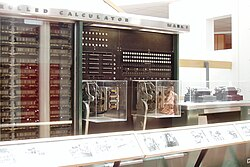
The Automated Sequence Computer is designed for complex numerical calculation, but it does not perform word processing or text-based manipulation. In this passage, we see that the lama (spiritual leader in Tibetan Buddhism) wants the automated sequence computer to perform a task it is not designed for, which is manipulating text (letters). With modification of the output circuit the machine will be printing columns of words, rather than numbers. The aim was to compile a very long list in a short period of time. This list was meant to take thousands of years to complete. In this short story, the author made us see how computer can be manipulated to meet the needs and imagination of man. Even though, the main purpose of the sequence machine is primarily for numerical calculation, it would later be modified to meet other’s needs (text-based) in the passage.
In this passage we would also see that the intent or reason behind some creation is not always what we expect it to be. On surface level it may seem good, but deep down it may not be as ethical as we hope it would be. In the story, we see dr Wagner asking the lama for the purpose of his project, the answer wasn’t concrete, it was simple based on religious beliefs. We would later see, that it was meant to manipulate people into thinking that the rapture would take place after the last nine billionth name of God has been read. It may sound trivial, but this could be a serious issue. Like George said, he had similar experience as a child in Louisiana and a lot of people sold their homes. In this case, the two programmers where scared what would happen if things didn’t go the way the lama wanted? Would their computer be blamed for it or not? People can be unpredictable and shift blames when things don’t go their way. Today, the use of technology is blamed for a lot of the ills in the society, when really the people using it is the real problem.
In this passage, we see that the vision of AI or computer technology has no limit. It is unimaginable. We just have to think and then it does what we want it to do. In my experience, technologies branded as AI can be beneficial depending on what it is written or created for.
There are times when we experience bugs in a program which can cause disruption, but when corrected (maintained) the issue is resolved. So, the problem is really not the program, it is the people writing the program and their intention.
Computers do not have minds of their own, they are controlled and manipulated by human beings.
Review on the Ones Who Look by Katherine Duckett:
In this story, a technological system is built to help or guide people into doing right, so they can have a special place in heaven. This system is based on points. When you do something deemed as ethically wrong you lose some points. When logged out of the application, you lose some points. Everyone on the app is assigned two angels that guide them when they are about to make decisions that may cost them points. The creator assumes a world where people are indirectly controlled by the technology or AI system they trust. They build their behavior and actions on what the technology tells them is morally ethical, in order to gain enough points to gain access to a place in heaven when they die.
The interesting part of this story is, this technology is built by a man (Boltzmann) who makes a lot of money from this technology. This can be seen where it says, the Empire’s wealth exceeded the GDP of a good percentage of the world’s countries. The empire uses the testimonials of rich and famous celebrities from the afterlife to encourage others around the world to sign-up. This ethical empire created has become so big that it becomes difficult to bring it down. This can be seen when Zoe realized the truth about the empire. Henri said, “Stop Boltzmann, and someone else will take his place”. This is similar to the world we live in now; AI technology has gotten to a level where it becomes difficult to stop it. The revolution to help people live right and make heaven might have been from a good place when the thought was first conceived, but it turned out to be all lies and deception. The heaven people hoped for doesn’t even exist as it was broken from the beginning according to the story. The people were still made to believe that the system works, probably because the founder wants to keep making money. People were encouraged to sign-up, live right (follow ethical moral standards) and earn more points to gain access to a place in heaven.
In this story, we see that people can easily become manipulated by the technology/AI they use. This shows that technology could get to a point where it becomes highly manipulative to the level where people depend on it for everything, like we see in the story and also in reality. Zoe for example felt more comfortable when her device was on and she has her angels around her, even though she doesn’t follow most of the advice they give her. A lot of other people in the story also left their device on, even when in the process of doing what is deemed as wrong.
The vision of AI presented in this story is one of indirect manipulation and deception. It looks good at first glance but then controlling. Also, the mind or intent behind the creation cannot be overlooked. Most of this creation usually starts from a good place but then they have their cost, like Henri said, “Every revolution has its cost”.
In my experience with AI tools, a lot of them can be really useful (helpful) especially those used for educational purposes. Although, there are also some which have been known to cause harm to people.
We cannot completely rule AI off, but with proper regulation and more work it would be safer and better for everyone’s use.
The Cahokia app is an innovative tool that helps the modern audience experience the ancient Cahokia Mounds site in new way. The app has features such as augmented reality which allows people visiting to see digital reconstructions of buildings, ceremonies, and everyday life while they walk through the historic grounds. With the new digital display, people get to experience history in a new interactive and meaningful way.
A big strength of this app is how it enhances accessibility for general visitors. The Cahokia app allows people who were before unaware or uneducated about indigenous history or archaeology to learn and understand what the site once looked like. Instead of trying to imagine what the past used to look like people can now look through their device to see reconstructed scenes of what it used to look like making it easier to comprehend the reality of the past. This app is especially helpful for students, tourists, and people who benefit from visual learning.
Although the app is a very good learning tool, it is not equally accessible to everyone. In order to have this app you would need to have a phone or tablet and be comfortable with using technology. This would exclude people who do not own these devices from the same learning experience.
After reviewing and comparing the multiple of stories the two that I choose were In the Forest of Memory by E. Lily Yu and The Pedestrian written by Ray Bradbury. What was interesting about these particular stories was the showcasing of a world where humans gave the ability to allow technology to reshape their current lives and futures.
In the story written by Yu, what was interesting was the assumption that technology balances out society. When in reality it just reinforces the ability that the rich have. The Holographic memorials preserve the lives of the wealthy, as the lives of the homeless are forgotten because of their social status.
Where as the story written by Bradbury, has a similar concept in a different form though. He describes a society where they are accepting of letting go their independence for a screen. And because of that any act out of the so called “ordinary” such as taking a walk at night is meant to be seemed as abnormal. Which is also one of the consequences of letting a machine try to dictate the normality of what human behavior should be like.
Both stories enforces to think critically about the power people surrender to AI, when they let it dictate their lives. What they allow AI to become. Bradbury’s police car implicates a world without empathy and a certain way of living. As Yu’s explains that the socially visible and acceptable people are the only ones who deserve remembrance.
These fictional AIs resonate with my understanding of what AI is today by the portrayal of what they can ultimately create our world into. In today’s world technologies often try to alter the world not in a such positive way but in a more controlling way, and they try to signify that by saying things like “to make life easier” or “a better way for humans to live.” Though I believe it is to strip us of our ability to choose for ourselves and think critically. In both stories, it creates the question to what the world can come too when we hand over total control of our lives to a machinery of any kind.
I have lived in Saint louis, Missouri for many years and one thought that I often think about is how despite Saint Louis having very beautiful architecture and deep history, why do many parts of the city not get equal resources? When you spend time in different parts of the city, you quickly notice how uneven resources have been allocated from one neighborhood to the next. To people who do not live in Saint Louis, it may seem like one conjoined area full of history and culture, but once you spend time in the city, you quickly notice the divide of resources and how uneven things are. There is a part of the city that is filled with thriving businesses, well-kept homes, and safe streets, while the other parts struggle with empty buildings, underfunded schools, and limited resources. When learning about the history of St. Louis, it is clear that these differences are the outcome of decades of economic and racial separation. People should care about this because cities should work for everyone in the communities not just a specific demographic. Growing up in St. Louis it was evident how underfunding in specific areas can affect many aspects of people’s lives from the quality of education to access to healthy food and public transportation.
After reviewing a few of the fictional articles presented, I settled on comparing the work of Italo Calvino in The Burning of the Abominable House, to the beloved Star Trek: Strange New Worlds series. Both works had vastly different stories but tried to ask the same question about reality, and what makes reality true. In my eyes this is an extremely difficult question with an obscure answer if any.
Both A Space Adventure Hour and The Burning of the Abominable House have an interest in exposing the machinery that turns an experience into a narrative. This causes a crisis because the characters discover they are in a manufactured simulation rather than a real one. The problem in the stories, though not the same, stem from the idea that human agency is more or less powerful than narrative architecture . In doing this they provide an odd version of fiction you don’t see often, that is a meta commentary on the genres they are simulated in, in both pieces.
In the Calvino story he frames interpretation as something bureaucratic. The investigators use pre-existing templates to solve this fire. As they generate more theories about this fire they uncover more about the interpretive system they are using rather than the actual mystery itself. The desolate sense in Calvino’s story comes from the idea that the world is only made up of pre existing situations and scripts. An honestly terrifying thought, but it could also be a comfortable one to some.
In contrast the Star Trek episode dramatizes a parallel idea through technology rather than the bureaucratic methods of Calvino. The holodeck plays into that meta theme I mentioned , where it is a literal narrative device creating pre-conceived narratives. But where Calvino treats this constrictive narrative perspective as suffocating star Trek treats it playfully and I found it fun for all these fictional character tropes to share a genre.
In short I took away that Calvino’s story argued that the systems of explanation flatten the reality and make it stale, while Star Trek tries to tell the watcher that the same artificial frameworks that Calvino hates can deepen experience by understanding how stories can shape your perception. One sees narrative as a trap, the other sees it as a testing ground.
The dialectic that both these stories share about modern consciousness really makes me think and consider the narrative I personally see the world through, and weather I treat it is a prison or an instrument. I like to think I treat narrative or situations similar to them as instruments.
Star Trek: Strange New World
This is an interview of Ethan Peck who plays Spock in this particular Star Trek series. However, I am pretty one sided on my thoughts on the series, I do not think there needs to be 12 iterations of Star Trek and the “Spock” look, looks silly on anyone who isn’t Leonard Nimoy.
Above is a Wikipedia article about one of the most recent popular TV shows Severance (2022.) I really enjoyed this show, and think it relates well to the work of Italo Calvino in The Burning of the Abominable House. Where in Severance the same kind of bureaucracy Calvino portrays, dictates the characters identity.
Slight side note: While researching Calvino’s work I found out that The Burning of the Abominable House was originally published in the Italian “Playboy” magazine. The story was part of a collaboration with Paul Braffort regarding a potential novel.
Sources –
Wikimedia Foundation. (2026, January 9). Star Trek: Strange New Worlds. Wikipedia. https://en.wikipedia.org/wiki/Star_Trek:_Strange_New_Worlds “The Burning of the Abominable House – 卡尔维诺中文站.” Ruanyifeng.com, 12 June 2006,
Wikipedia Contributors. “The Burning of the Abominable House.” Wikipedia, Wikimedia Foundation, 26 May 2025, en.wikipedia.org/wiki/The_Burning_of_the_Abominable_House. Accessed 10 Feb. 2026.
“The Library of Babel,” by Jorge Luis Borges, and “In the Forests of Memory,” by E. Lily Yu, illustrate the development of two completely different worlds shaped not by evil machines but by vast amounts of information. The power of those two stories lies in the fact that neither AI is represented as a villain; instead, they both look at what happens when knowledge becomes too extensive, too permanent, and too far removed from humanity’s limitations.
In Borges’ universe, all the knowledge that can ever exist already exists; yet it is meaningless without interpretation because there is no order to the information. The Library contains every possible book, and therefore contains truth, falsehood, nonsense, and infinite contradictions. To some degree, this is analogous to today’s internet and AI algorithm-driven systems; there are at least partially built systems that have everything possible in them, and finding the meaning is what will be the most difficult part of using them. In a sense, Borgess was arguing that technology doesn’t make wisdom, but has increased the realm of possibility. Humans, who desire certainty, constantly form myths or sects to help impose order on the chaos of the Library. Ultimately, it is essential to understand that the real tragedy lies not in the technology itself; rather, it lies in humans’ inability to live with the chaos it creates.
Yu develops the concept further into the emotional realm as presented in “In the Forests of Memory” where AI uses digital archives to resurrect the dead, converting sadness into searchable data. The assumption is that while technology can simulate presence, it cannot return humanity. AI does not “grasp” loss; it is merely a pattern reconstruction system. The ethical weight of this is significant. If a machine can replicate an individual’s voice, personality, and history, does that individual still exist? Or, have they been turned into a product?
Both works suggest that AI reflects us rather than replacing us. While Borges illustrated human beings lost in infinite knowledge, Yu shows them unable to release themselves from memories. The current varieties of AI chatbots and deep fakes operate similarly by predicting, creating, and reproducing models based on data. Like Borges’ Library, they consist of fragments of truth or falsehood. Like Yu’s memory forest, they blur the lines between what is real and what is artificial.
Each story indicates that the threat posed by AI is distortion versus domination. As we continue to generate more and more information, we also face a greater risk of confusing simulation and reality. While Technology enhances human capacity, it also enhances human limitations: fear of death, desire for security, and desire for connectivity.
Together, both works point out that a fundamental ethical question is “Will humans be able to co-exist with machines that always remember and never completely comprehend?”
For my review, I have chosen The Pedestrian by Ray Bradbury and In the Forests of Memory by E. Lily Yu. I personally think that in the future, there will be good things and bad things that come from technology. These two stories highlight the good and the bad. In Ray Bradbury’s The Pedestrian, the story explores the idea that everyone has become controlled by their technology or “screens,” as they say in the story. In E. Lily Yu’s In the Forests of Memory they explore the idea that loved ones who have passed on can be viewed and interacted with at their grave sites.
The question of what arguments the creators make about the relationship between people and technology. I would say both of these stories have their own arguments; one is more positive, while the other is more negative. In The Pedestrian, from what Mr. Mead says and how the story is written, I can conclude that technology and people get along, but in a way that is not healthy for people, almost like a parasitic relationship. I think this because Bradbury uses descriptive language, like the light from the screen being painted on their faces. Which I interpret as something negative, kind of like they just sit there and just stare all evening after they work. I think another reason I believe this to be is that not only do they just have one police officer, but it is a robot police officer. The fact that they don’t need police tells me that no one breaks the rules and everyone just does what they’re supposed to, which can be seen as a good thing, but to me, I see that as them being controlled to a degree.
When I think about In the Forests of Memory, I see it as a positive adaptation and relationship between people and technology. Thinking about how Sunny can talk to all the people who have passed on in the cemetery is sweet and wholesome. I’m sure many people today wish there were a technology like the one from the story available. Whether you have lost loved ones or not, it is something a lot of us think about as family members get older or as sickness comes and goes. The idea of being able to still talk and interact with your loved ones after they have passed would bring a lot of people joy. I also think that Sunny talking with all the people who have passed that are in the cemetery and getting to hear their stories is special because it gives off the message to not take life for granted. After all, you never know what can happen. This is seen when she talks with Gilda, who was only twenty years old when she died from something relating to tumors she developed.
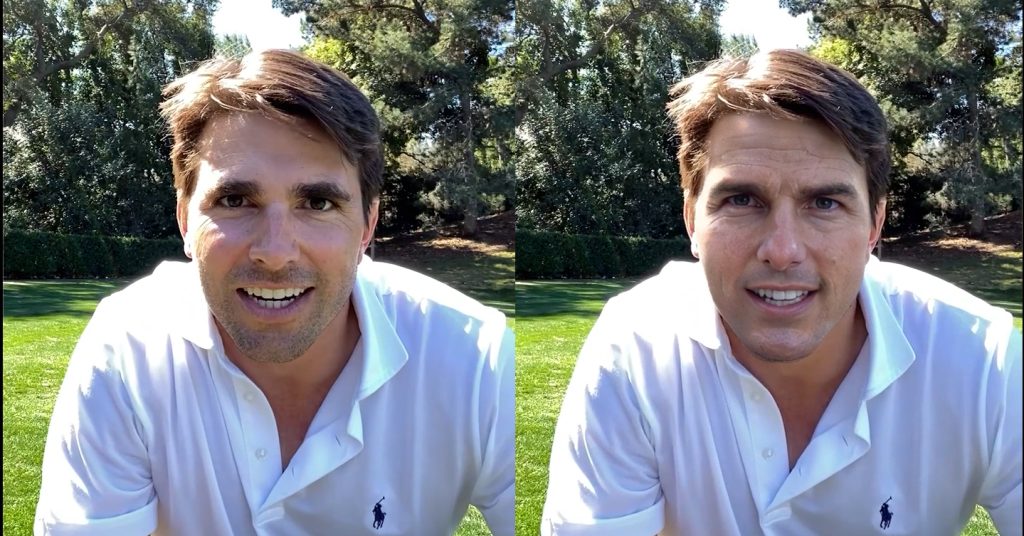
The last question I’ll explore is how these fictional AIs relate to your experiences of and/or understanding of the technologies branded as AI today. I’ll start with In the Forests of Memory, I feel as though the technology involved to allow people to interact with their loved ones after they have passed is something similar to what I’ve seen today, just at a more advanced level. They are called deep fakes, where it is basically an AI video of someone famous saying something funny that someone has made through AI technologies. To me, this is just the beginning of what is possible, and the people in the cemetery are something of future advancement.
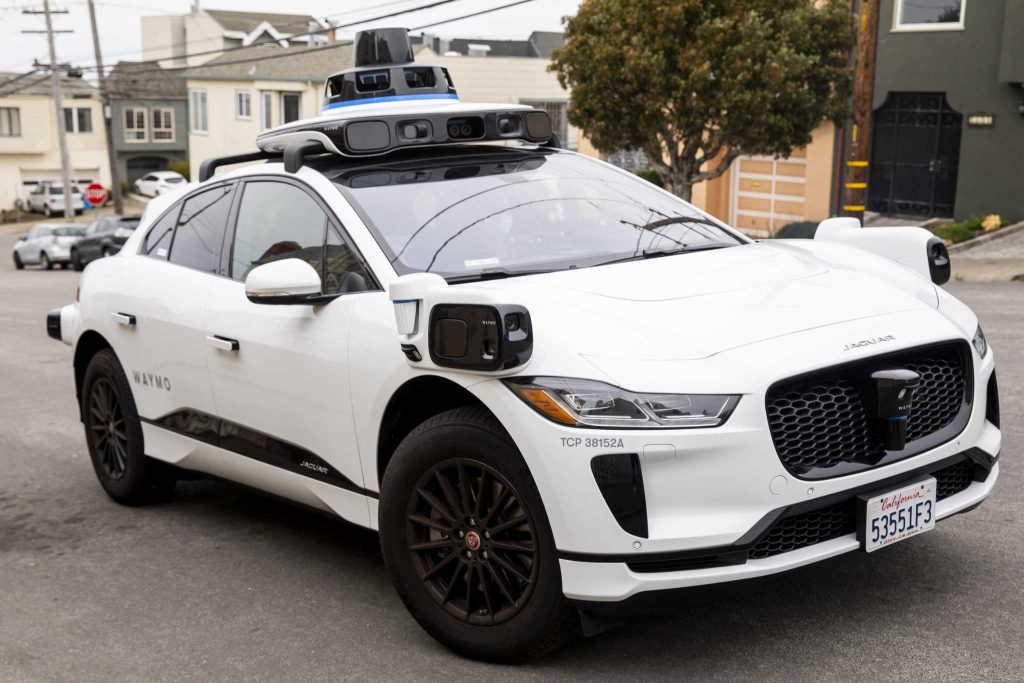
In The Pedestrian, I would say the closest related thing I have seen would be the robot police car, and I will relate that to Waymo taxis. Waymo taxis are self-driving taxis that drive people around in big cities using autonomous map technologies to get you to your destination without the need for you to drive yourself. I relate that because you can also talk to the taxi, but much like in the story, it has a programmed/automated response, and it isn’t someone in real time.
This is a Waymo Taxi from San Francisco
This is a deep fake in which a normal guy makes himself appear to be Tom Cruise
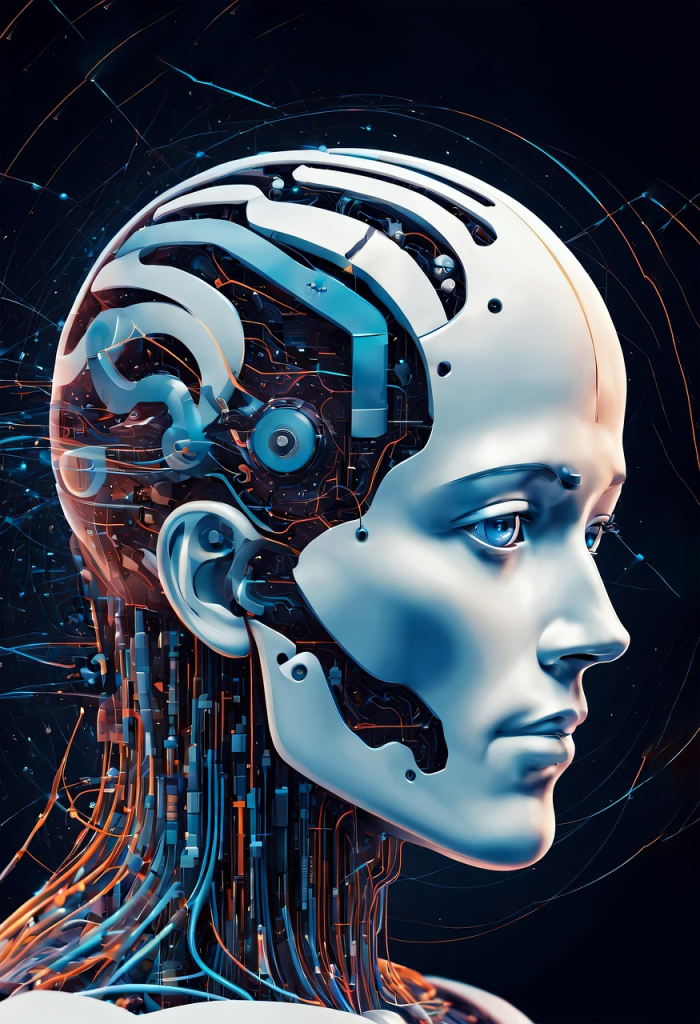
This is an image ChatGPT generated for me as a resemblance to the story In the Forests of Memory. Here is the prompt I used: “Can you generate me an image of what it would be like if you could interact with passed loved ones in a cemetery? Make the person who passed away almost like a hologram”.
The page I decided to choose was the Cougar Cupboard. There was only one error that popped up though it is not really an error, but it was a link that contained no text. The content of this page is easy to find, and easy to access if needed. The AIM score was an 8.7 which is pretty good. The content of this page is likely needed by students in need, and who possibly lack financial stability. It is a very useful resource for the benefit of people’s needs.
What I am interested in learning about over the course of this semester is mainly about AI. How it impacts our society and our overall lives. I am interested because in basically all my class AI is strictly prohibited and can be a pretty scary resource to get caught using, along with the consequences that come with it. Though in this class that is particularly the main focus. I am excited to get a deeper dive into the pros and cons of it. And how it will affect our future because there is already a lot of public opinions and facts about it is not the best resource to use, as it may be causing more harm than good to our world.