
Malnutrition Hidden in Plain Sight
Malnutrition is a persistent societal problem existing in all parts of the world, but most people are unaware of how prevalent it is on college campuses. The true definition of malnourishment is constantly misinterpreted, and too many college students experience malnutrition without ever knowing it.
College students often eat enough calories, but rely heavily on meal plans and convenience foods that lack the nutrients required to meet everyday needs. When life gets busy, nutrition often gets overlooked and forgotten about. It then just becomes more about meeting hunger needs than nutritional needs, which can lead to suffering in academic and mental outcomes.
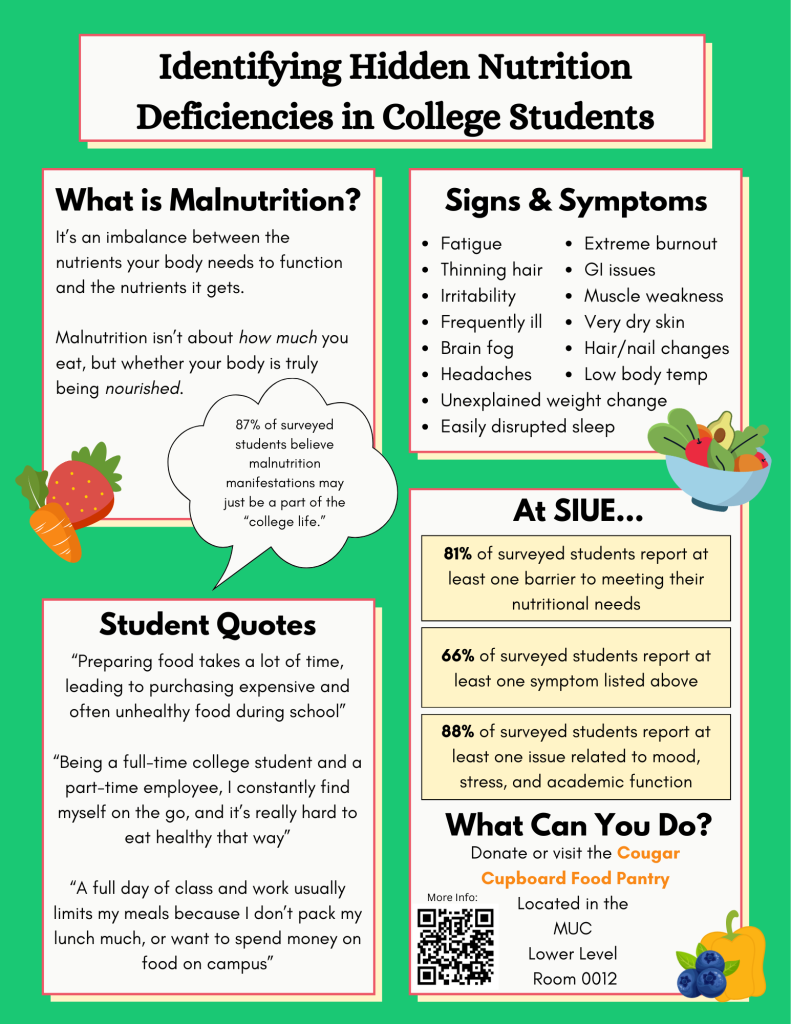
To uncover these hidden indications of malnutrition, I surveyed SIUE students through a three-section questionnaire that highlights malnutrition manifestations and trends.
Section one addressed food access and eating patterns by asking these questions:
- How often do you skip meals due to a lack of time?
- How often do you rely on convenience or ultra-processed foods (e.g., pizza, packaged snacks, fast food) for meals?
- How often do cost concerns influence your food choices?
Throughout the three sections, students were prompted to respond with either always, often, sometimes, rarely, or never.
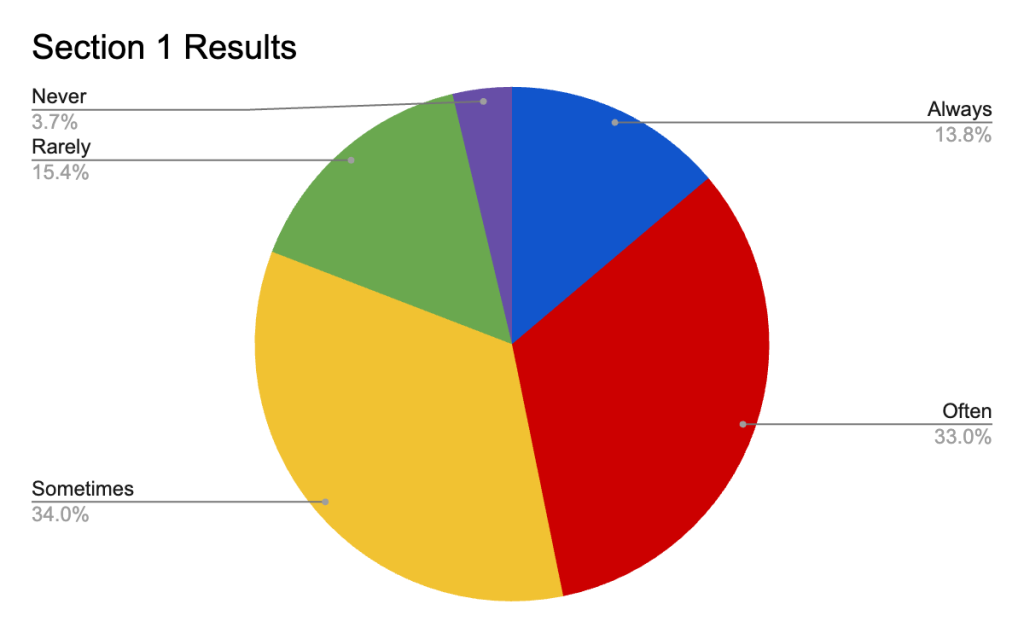
81% of surveyed students answered either always, often, or sometimes.
Section two addressed how often they experience the physical & cognitive symptoms associated with nutritional deficiencies.
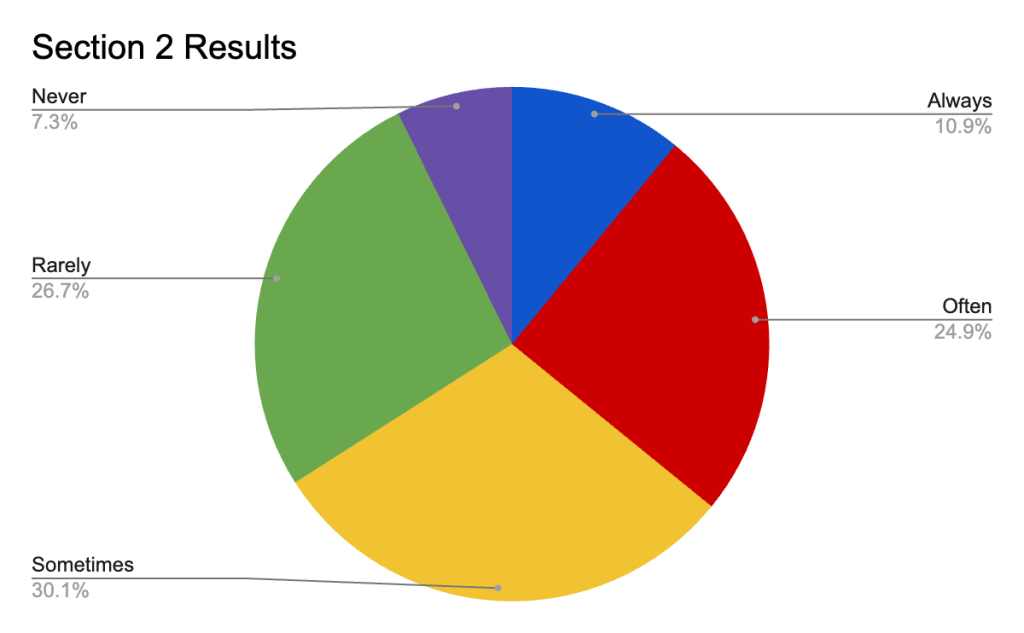
66% of surveyed students answered either always, often, or sometimes.
Section three addressed mood, stress, and academic function by asking these questions:
- Do you experience constant increased feelings of anxiety or irritability?
- Do you experience constant low mood or lack of motivation?
- Do you experience feeling overwhelmed constantly by daily tasks?
- Do you experience difficulty staying focused in class?
- Do you experience feeling physically run-down even with adequate sleep?
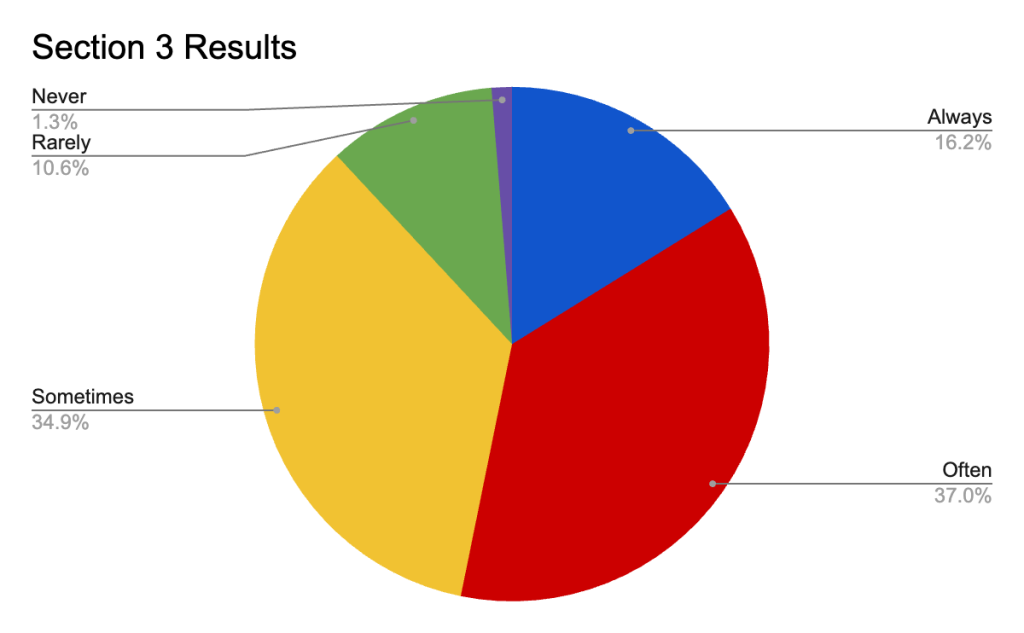
88% of surveyed students answered either always, often, or sometimes.
After completing the three sections addressing these barriers and manifestations, students were then asked if they assumed these symptoms were simply “part of college life.”
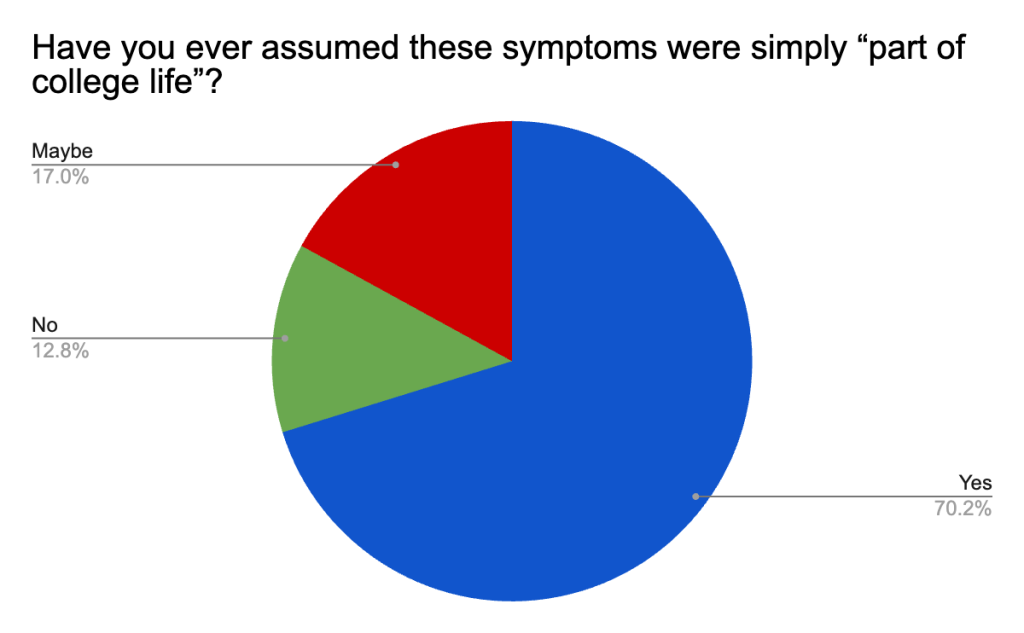
87% answered either yes or maybe.
If more than half of just 47 surveyed students are already experiencing the physical and emotional manifestations of malnutrition, while also facing many barriers to accessing the nutrition they need, imagine how many more college students, not only at SIUE, but worldwide, are experiencing the same invisible battle. This is more than a statistic; it’s a reality that represents exhausted students sitting in classrooms, struggling to focus, feeling physically drained, and carrying burdens no one else can see. Malnutrition on college campuses is not always visible, but its consequences are real, affecting energy, mental health, academic performance, and overall well-being. Ignoring it allows students to continue suffering in silence. Recognizing it gives us the power to create change, to ensure that no student’s potential is limited by something as fundamental as nourishment.
Sources:
Almoraie NM, Alothmani NM, Alomari WD, Al-amoudi AH. (2025). Addressing nutritional issues and eating behaviours among university students: a narrative review. Nutrition Research Reviews. https://www.cambridge.org/core/journals/nutrition-research-reviews/article/addressing-nutritional-issues-and-eating-behaviours-among-university-students-a-narrative-review/1CE93E9FFFFC7510653DDAA8FC08BF9B
Cleveland Clinic. (2023). Malnutrition: Definition, causes, symptoms & treatment. https://my.clevelandclinic.org/health/diseases/22987-malnutrition
SIUE Cougar Cupboard Food Pantry: https://www.siue.edu/student-affairs/dean-of-students/cougar-cupboard.shtml


You May Also Like

Rethinking Fast, How Slower Shipping Can Save the Planet

Find Your Way