I walked into the St. Louis Art Museum ready to see “the German modernism exhibit,” only to realize that asking for it was like asking where they keep the art. SLAM’s German collection is sprawling. Luckily, an employee saw through my confusion, offered me a map, and directed me to the rotating exhibit titled always modern. Map in hand and mission in mind, I made a beeline to the galleries.
Always modern offers flashes of brilliance—especially in its Symbolist and Expressionist sections—but the exhibition’s coherence is weakened by puzzling curatorial choices, particularly the distracting placement of furniture that never quite fits the narrative.
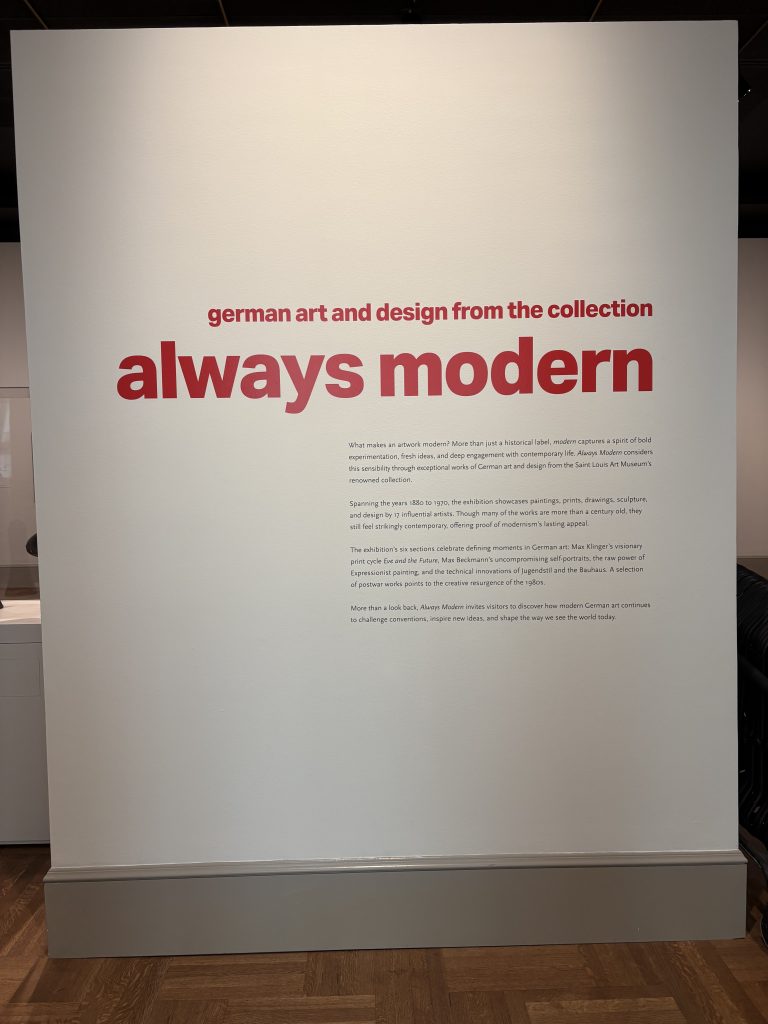
Upon my arrival, I was immediately underwhelmed. The lighting was dim and dingy, and I soon laid eyes upon a cart of chairs that were certainly NOT representative of the period. I turned my gaze to a rather helpful description of the exhibit. The period, I was authoritatively informed, would cover Germany from 1880-1970 and emphasized that though more than a century old at this point, the objects on display would be immediately recognizable to a denizen of the 21st century. This prompted me to re-engage with a recurring theme in art museums: What is modernity? A 19th-century dresser recognizable today complicates the category more than any utopian fantasy ever could.
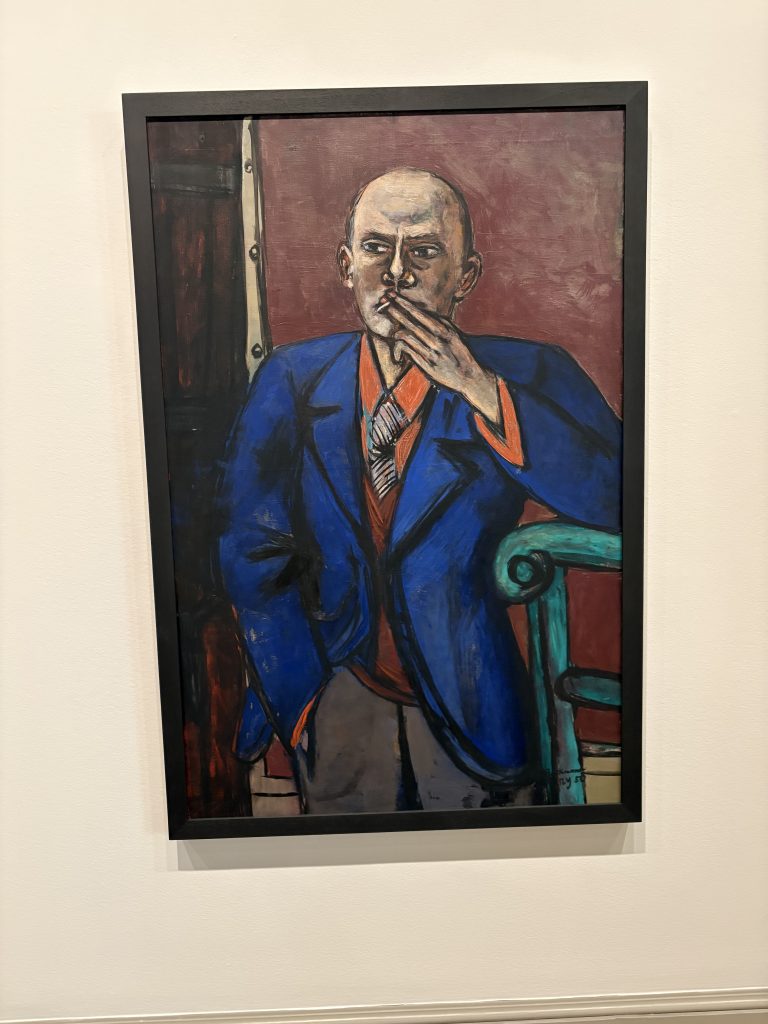
My idle musings on turn-of-the-century furniture complete, I made my way to the right where I met the gaze of one of Max Beckmann’s many self-portraits. I was assured by the label that this was one of many such self-portraits. As the exhibit did not contain any additional Beckmann portraits, it was an assertion I had to take on faith.
My slight disappointment with the distinct lack of more Beckmann was immediately lifted once I moved counterclockwise to the Symbolist portion of the exhibit. I have been obsessed with this movement for months now and Klinger’s print cycle Eve and the Future did not disappoint. I was most drawn to the third panel depicting the Fall.
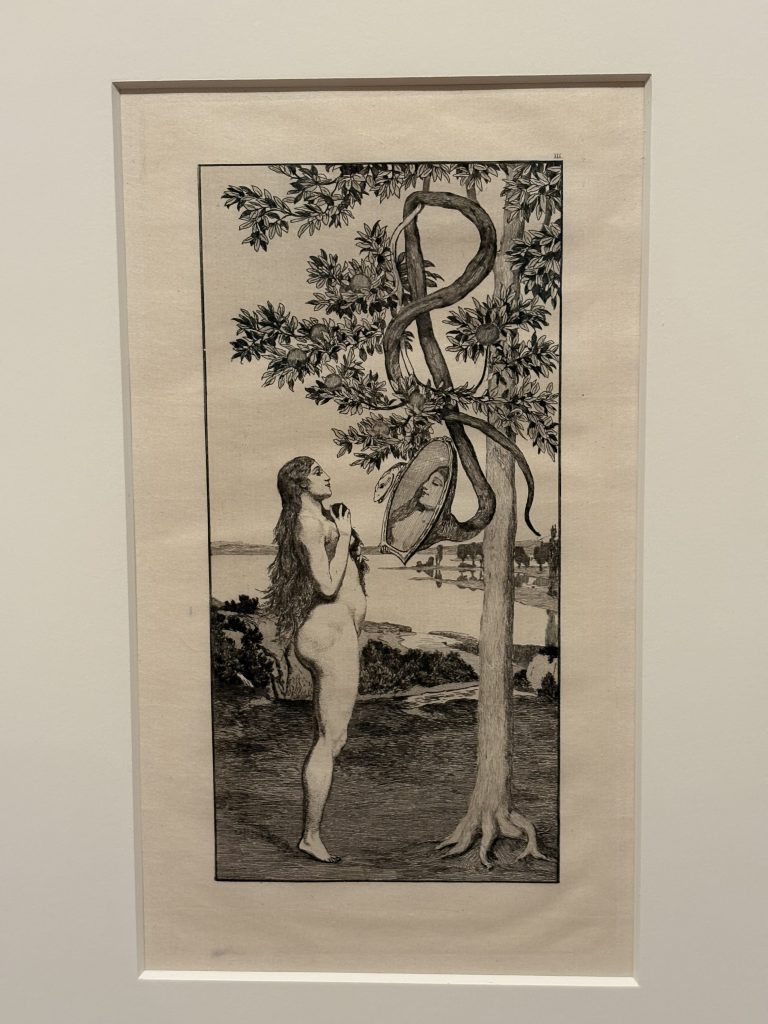
Unlike most depictions, the only subjects are Eve and the Serpent. Also, unlike most depictions, the Serpent is holding a mirror which Eve is gazing into. This is quintessential symbolism – familiar themes interspersed with the unfamiliar enriched by an otherworldly quality that draws you in and doesn’t let you go. All six prints had this intoxicating quality about them. Indeed, the figure of Death standing triumphant over Adam and Eve’s graves (depicted in the sixth panel) still lingers in my mind.
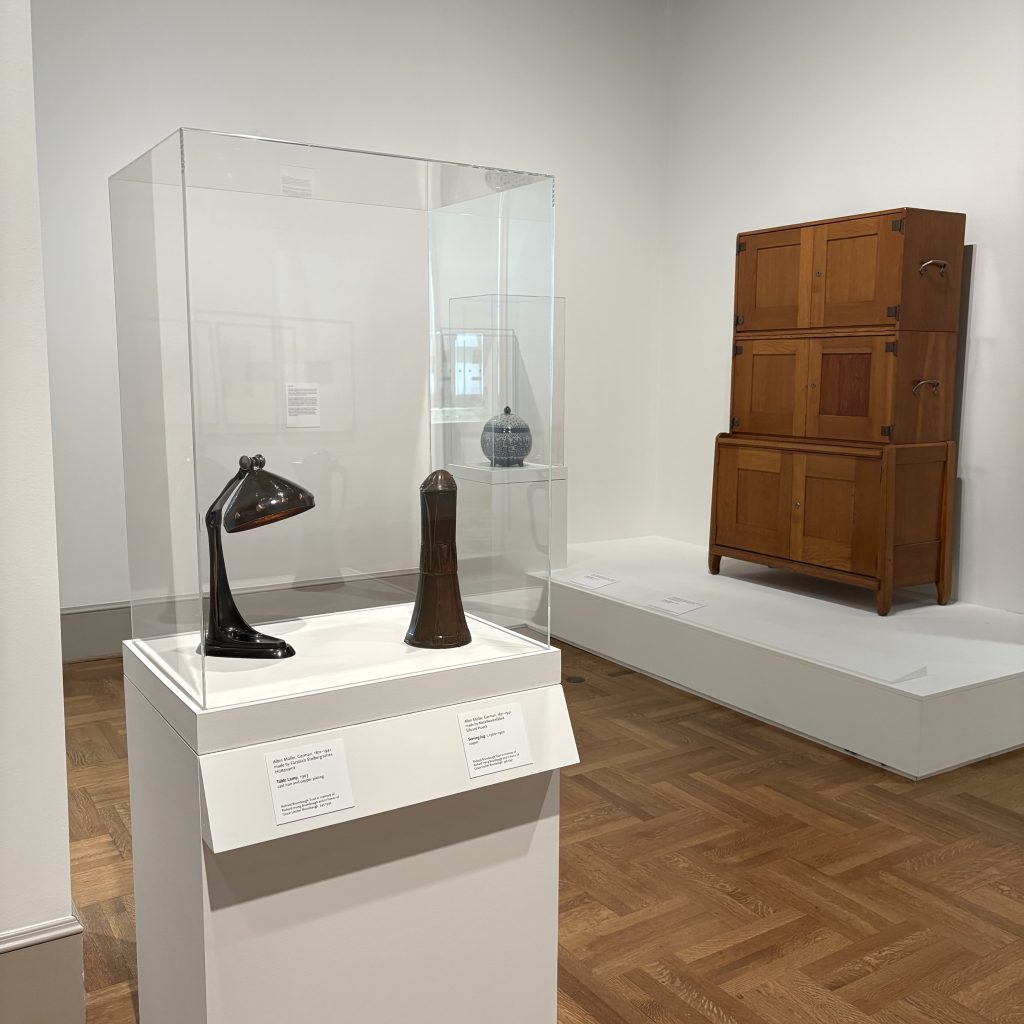
Finally tearing my eyes away from Herr Klinger’s work, I continued counterclockwise to an uninspiring array of furniture. The Jugendstil corner felt like an afterthought. Though the objects were period‑appropriate, their selection lacked thematic coherence, and the display diluted the exhibition’s focus. A more intentional in situ arrangement would have strengthened the interpretive message.
Thankfully, my confusion concerning Jugendstil furniture was happily allayed by a charming and unique interpretation of Arnold Böcklin’s Venus Anadyomene. I appreciated the curatorship here – the painting was placed by Klinger’s work, illustrating the chain of inspiration that led to Eve and the Future. This curatorial decision enhanced the thematic consistency of the painting portion of the gallery.
Having completed my time in the first gallery, I moved into the next room where I was greeted with some unique furniture courtesy of Germany’s 20th century Bauhaus movement. This section made slightly more sense—art and design are inseparable in the movement —but the placement of Feininger’s The Glorious Victory of the Sloop “Maria” remained puzzling. If he had a Bauhaus connection, the exhibition didn’t communicate it; if he didn’t, the juxtaposition only muddied the metaphorical waters.
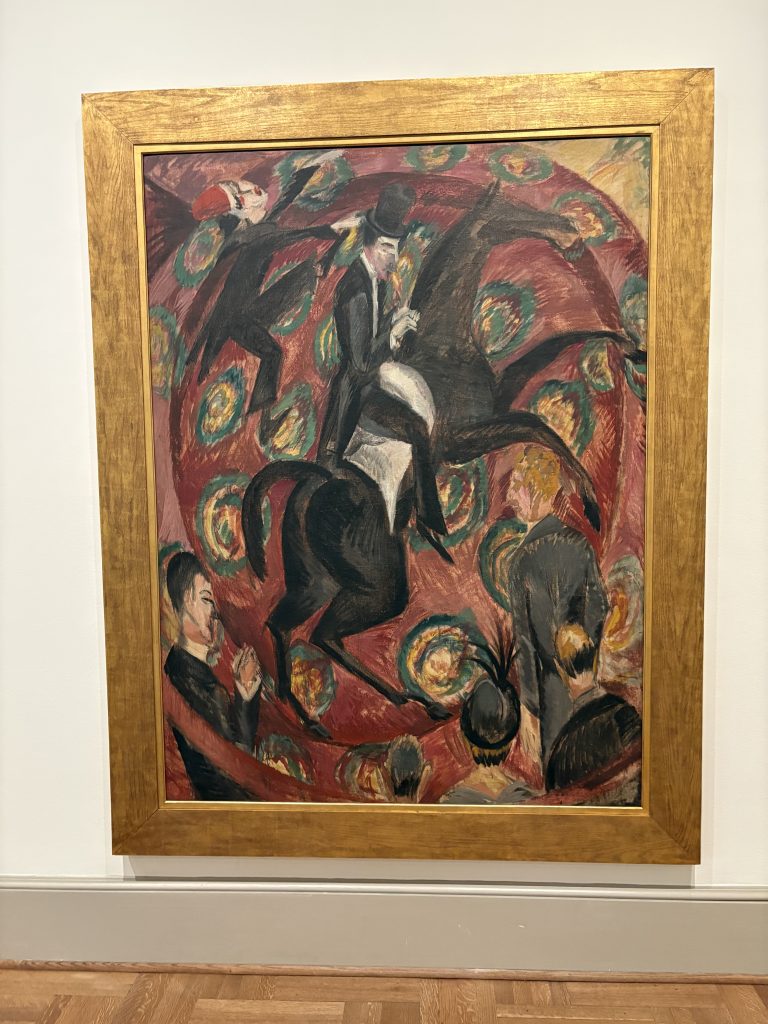
The highlight of this gallery, however, were four works highlighting the German Expressionist movement of the early 20th century. The selection — two hellish landscapes executed by Ludwig Meidner, a psychedelic circus depiction by Ernst Kirchner (pictured below), and an idyllic woodland trio of female figures by Otto Mueller – offered a diverse set of portraits that highlighted the artistic movement’s complexity.
Don’t mistake my criticism for cynicism. All told, the exhibition was well-executed. The big idea of the exhibit was clearly communicated in the introductory label and pertinent. However, the other interpretive texts would have benefited from a clearer tie into the exhibit’s raison d’être. Ultimately, the exhibition delivered a thoughtful survey of German modernism, even if its ambitions occasionally outpaced its coherence. A bit more focus — especially in the integration of furniture — would have strengthened an altogether positive experience.
Leave a Reply