When “Help at Home” Feels Too Generic: Custom Home Care Services in Camden, NJ
Why “generic help” often falls flat

Photo by Freepik
If you’ve ever tried to solve a very specific problem with a very generic solution, you know how this goes. It’s like buying a “one-size-fits-all” hoodie and realizing it fits… nobody. Too short here, too tight there, awkward everywhere. And somehow it’s still expensive.
That’s exactly how families in Camden can feel when they start searching for home care: they ask for “help at home,” and what they get back is a vague list of tasks—meals, bathing, light housekeeping—like a standard menu with no personalization. Meanwhile, the real issue isn’t that your loved one needs “tasks.” The real issue is that their day is getting harder to run, and the hard parts happen in very specific moments.
That’s why home care services customized for Camden NJ matter. The difference between “generic help” and customized care is the difference between someone doing chores in your home and someone making the home feel livable again—at your pace, with your preferences, and without turning your routine into a stranger’s routine.
The problem isn’t effort—it’s fit
Most seniors aren’t refusing help because they “don’t want anyone.” They’re refusing help because the help doesn’t fit. It shows up at the wrong time, focuses on the wrong tasks, or feels intrusive.
For example:
- A senior might be totally fine at 10 a.m., but feel shaky at 7 p.m.
- They might handle meals, but struggle with cleanup and standing too long.
- They might be private about bathing, but open to standby safety support.
- They might want company—but not someone who talks nonstop.
When help doesn’t match these realities, it feels generic. And generic help gets resisted, ignored, or cancelled.
A one-size plan can accidentally create new stress
A generic plan can create problems families didn’t have before:
- Visits scheduled at the wrong time window, causing rushed routines later
- A caregiver who rearranges the kitchen “to help,” creating anxiety
- Too many tasks packed into one visit, making the senior feel pushed
- Communication that’s vague (“All good!”) so families still worry
Customized care is the antidote: it reduces stress instead of shifting it around.
What “custom home care” actually means
Let’s strip the buzzwords away. Custom care means the support is built around how your loved one actually lives, not how a checklist says they should live.
Custom = built around routines, not just tasks
Tasks are what you do. Routines are how your day holds together.
A routine-based approach asks:
- When does the day tend to wobble?
- Which tasks drain energy the most?
- Which moments feel unsafe or rushed?
- What does your loved one insist on doing themselves (because it’s identity)?
- What kind of support style feels comfortable?
Customized care is the difference between “we help with bathing” and “we support a calm evening routine so bathing doesn’t feel rushed or scary.”
Support that flexes by day, not just by month
Some days are strong days. Some days are slower days. Customized care allows for a little flexibility:
- standby support on a good day
- closer help when fatigue spikes
- more meal support when appetite dips
- more companionship when loneliness feels louder
It’s still structured—just not rigid.
The Camden, NJ reality check
Every city has its own daily friction. Camden families often deal with a few themes that shape what “good care” looks like.
Home layouts, stairs, and tight spaces
Even when a home is familiar, it can become harder to navigate with time:
- steps at entryways
- narrow hallways
- bathrooms that don’t leave room for rushing
- laundry in inconvenient spots
Customized care focuses on “home flow”—making the space easier to move through without turning it into a clinic.
Family schedules, commutes, and “I can’t always be there” pressure
Many adult children are balancing jobs, kids, and unpredictable schedules. That creates an invisible stress: being mentally on-call.
Customized care reduces that pressure by placing support at the moments families can’t reliably cover—often mornings, evenings, or weekends.
Weather swings and the “rushed evening” problem
When evenings are darker, colder, or simply more tiring, routines get rushed:
- bathroom trips
- dinner setup
- changing clothes
- bedtime prep
Customized care often targets evenings because fatigue + rushing is where risk grows.
The Custom Care Blueprint

Photo by Freepik
Here’s a practical framework families can use to shape care that actually fits.
Step 1: Identify the pinch points
Morning launch, midday drift, evening landing
Most households have predictable stress windows:
- Morning launch: getting up, bathroom routine, dressing, breakfast
- Midday drift: skipped lunch, low hydration, isolation, “dozing”
- Evening landing: fatigue, dinner, bathroom trips, night setup
Customized care starts by supporting the pinch point that causes the most instability.
Step 2: Decide what stays yours
Keep / Share / Delegate
A great customization tool is splitting tasks into three categories:
- Keep: the tasks your loved one wants to keep because it’s identity (choosing clothes, making coffee, watering plants)
- Share: tasks they can do with a steady presence (cooking together, shower with standby support)
- Delegate: tasks that drain energy or increase risk (laundry hauling, heavy cleaning, errands)
This protects independence while still making the day easier.
Step 3: Match caregiver style to personality
Quiet presence vs conversational support
The “what” matters, but the “how” matters just as much.
Some seniors relax with a calm, minimal-talk caregiver. Others feel better with friendly conversation. A mismatch here can make care feel intrusive—even if the tasks are done perfectly.
Step 4: Build the home around safe flow
Walking lanes, lighting, and clutter creep
Customized care includes micro-adjustments:
- clear walking lanes (bedroom → bathroom → kitchen → favorite chair)
- easy lighting access before movement
- reducing clutter creep in hallways and near the bed
- placing essentials within reach
These changes prevent the “little near-miss” moments that make families anxious.
Step 5: Create routines families can trust
Notes, updates, and consistency

Photo by Freepik
Customization isn’t just what happens during visits—it’s how the plan stays consistent:
- caregiver remembers preferences
- routines happen in the same order
- updates are clear enough that families aren’t guessing
- the plan adjusts when needs change (without chaos)
That’s when home care services customized for Camden, NJ start to feel like real stability, not a rotating experiment.
What customized home care can include
Now let’s get practical. Here are common service areas that can be customized to fit your loved one’s routine and comfort level.
Meals and hydration that fit real appetites
Most seniors don’t need a complicated meal program. They need consistent nourishment that doesn’t feel like a project.
“Easy yes” foods and base-camp hydration
Customized meal support can include:
- keeping favorite staples stocked
- prepping simple meals that match preferences
- portioning leftovers so reheating is easy
- setting up snacks for low-energy times
- creating “base-camp hydration” (water or preferred drink within reach of the main chair)
The goal is not gourmet. The goal is steady meals that actually happen.
Personal care with privacy and dignity
Personal care is where many seniors get protective—and that’s understandable. Customization here is all about control and respect.
Standby vs hands-on support
Customized personal care might look like:
- standby support: caregiver sets up towels/clothes, stays nearby for safety
- hands-on assistance: support with bathing, dressing, grooming as needed
- permission-first approach and two-option choices (“wash-up or shower today?”)
When dignity is protected, cooperation goes up—and the whole routine gets easier.
Mobility help that focuses on the risky moments
Mobility support isn’t just “walking.” It’s the moments where balance gets tested.
Transfers: bed, chair, toilet
Customized mobility support can include:
- calm pacing (stand → steady → walk)
- setup before movement (lights on, clear path)
- assistance with chair/bed/toilet transfers
- reducing rushed bathroom moments in the evening
This helps seniors move with more confidence, which often keeps them more active at home.
Light housekeeping that protects safety
This isn’t about making the home perfect. It’s about making the home easier to live in.
Laundry, linens, and the two-minute reset
Customized housekeeping can include:
- laundry wash/fold (and reducing heavy basket carrying)
- linen changes (huge comfort boost)
- dishes and kitchen reset after meals
- trash removal before it becomes heavy
- a quick daily “two-minute reset” to keep walkways clear
When the home feels calmer and safer, everyone relaxes.
Medication routine support that reduces uncertainty

Photo by Freepik
Families often worry about medication routines because uncertainty creates anxiety.
Less “did I?” stress
Customized routine support can include:
- consistent time-window prompts
- a stable medication station (same place every time)
- simple tracking to reduce confusion
- refill awareness so nothing becomes urgent
It’s about routine consistency, not policing.
Companionship that keeps the day from shrinking
Companionship isn’t fluff. It prevents the day from collapsing into a chair-and-TV loop.
Connection without pressure
Customized companionship might include:
- conversation that matches the senior’s style
- shared activities (music, photos, cards, simple hobbies)
- short walks or porch time (as appropriate)
- errands together where the caregiver handles the carrying and pacing
Connection often improves appetite, motivation, and overall mood.
Family relief that prevents burnout
Care doesn’t only support seniors—it supports families who are stretched thin.
Weekend stabilizers and backup coverage
Customized family relief can include:
- weekend coverage so family visits aren’t only chores
- “stabilizer” blocks for laundry, linens, meal prep, home reset
- predictable scheduling so families can plan their lives
- backup coverage planning so one change doesn’t derail the week
That’s what “support” actually feels like.
A table you can screenshot
Need → customized support → what improves
Need families notice | Customized support option | What often improves first |
Meals are inconsistent | simple meal prep + snack setup | energy, mood |
Low hydration | base-camp drink setup + refills | fewer low-energy days |
Evening feels risky | evening landing + bathroom pacing | calmer nights |
Transfers look shaky | pause-point mobility support | fewer near-misses |
Laundry piles up | laundry + linens routine | comfort, sleep |
“Did I take it?” worry | medication routine prompts + station setup | less anxiety |
Loneliness is growing | companionship matched to personality | engagement |
Family burnout | weekend stabilizer + respite | less stress |
How Always Best Care approaches customized care in Camden
If you’re looking for home care services customized for Camden, NJ, the most important thing is that the plan fits real life—not just a template.
With Always Best Care, customization typically centers on three areas:
Personalized plan design
Instead of “here’s what we offer,” the plan focuses on outcomes:
- steadier meals and hydration
- calmer personal care routines
- safer movement and transfers
- a home that feels easier to navigate
- consistent communication families can rely on
Caregiver matching
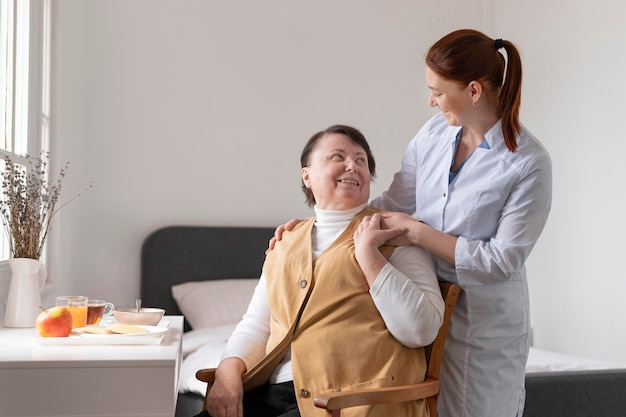
Photo by Freepik
A good match reduces resistance and makes care feel natural:
- tone (quiet vs conversational)
- pace (slow and steady vs energetic and structured)
- respect for privacy boundaries
- respect for “do-not-move” home setup rules
Reliable communication
Families worry less when updates are practical:
- what routines were completed
- how the day went (energy/mood)
- anything to restock
- any adjustments that could make the week smoother
That’s how customized care becomes dependable care.
How to start without overwhelming your loved one
Starting care can feel like a big step. The trick is to start small and smart.
A realistic first-week setup
A gentle first week often looks like:
- Choose the hardest time window (morning, midday, or evening).
- Choose 3 outcomes (meals/hydration steady, laundry handled, safer evening routine).
- Start with a few visits and adjust after you see what actually helps.
Seniors often accept support faster when it begins with behind-the-scenes help (meals, laundry, home flow) before moving into more personal routines.
What to ask for on day one
To keep things customized, ask:
- “Can we focus on the hardest time of day?”
- “Can we start with meals/hydration and a safety reset?”
- “My loved one prefers privacy—can we use standby support where possible?”
- “How do you match caregiver style to personality?”
- “What kind of updates will the family receive after visits?”
Specific requests create predictable results.
Closing Thoughts
When “help at home” feels too generic, it’s usually because the plan isn’t built around real routines and real preferences. Customized care changes that. It targets pinch points, protects dignity, supports safe movement, stabilizes meals and hydration, and keeps the home feeling calm and livable. If you’re searching for home care services customized for Camden, NJ, Always Best Care can help build a plan that feels like it belongs in your loved one’s home—because it was designed for their life, not for a checklist.