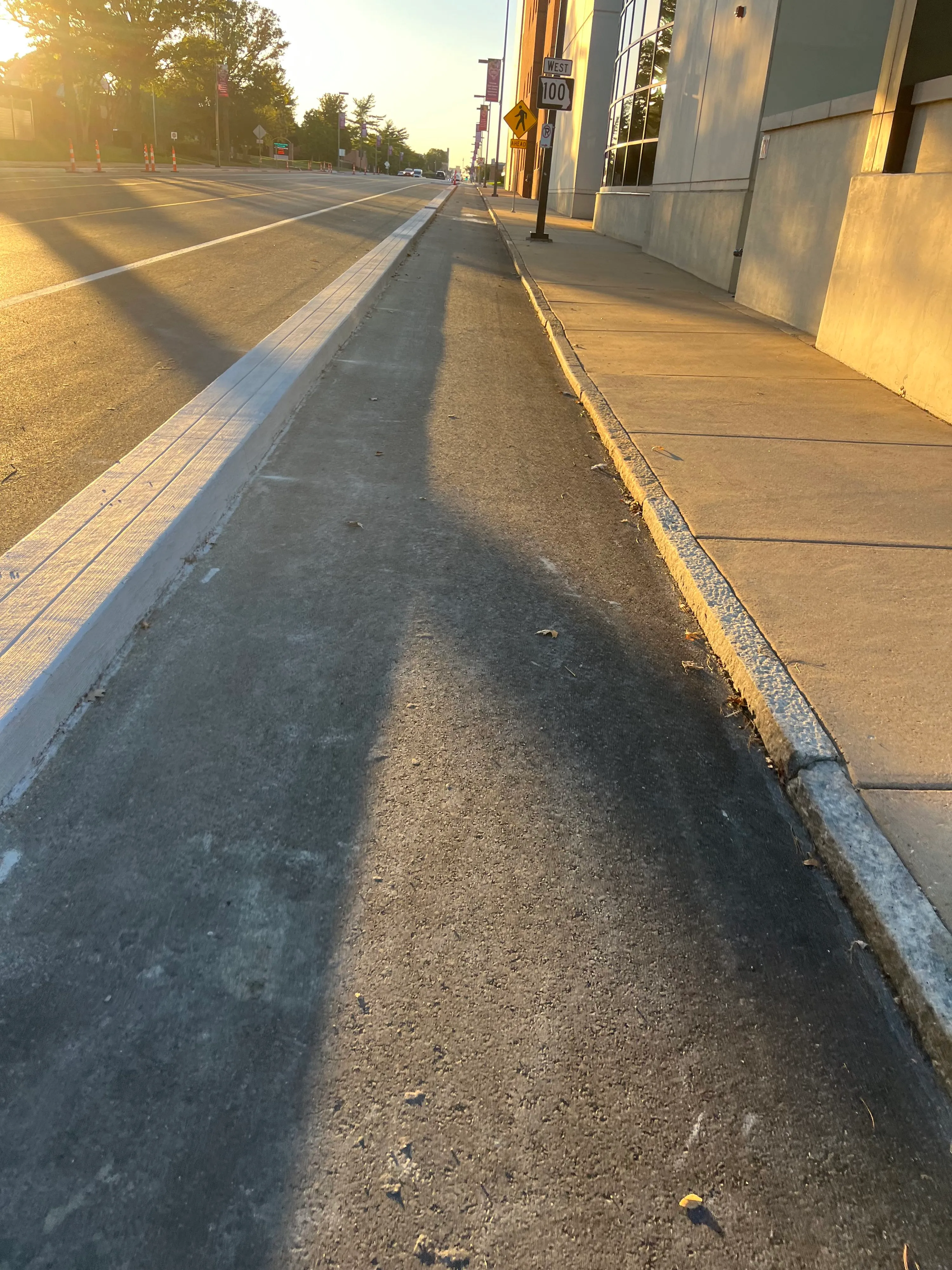
Posted about WWD on social media
>All day, every day!
Became a Trailnet member
>Ope, already a member!
Used the greenways
>All the time!
Rode a bike
>Just about every day
Asked a nondriver about their experience
>Monday, Oct. 5
Used the Transit App to plan a route
>Every day
Ran an errand car-free
>Sunday, Oct. 4
Requested a ride from friends, Call-A-Ride, or others
>Tuesday, Oct. 6
Rode the MetroLink
>Almost every day
Advocated for more public transit or bike lanes
>Thursday, Oct. 8
Bought or used a Metro ticket or pass
>Thursday, Oct. 1
Noticed new street infrastructure
>Wednesday, Oct. 7
Free space
>Transit infrastructure is a public good!
Used the bus bike racks
>Wednesday, Oct. 7
Took a walk around your neighborhood
>Tuesday, Oct. 6
Took the bus
>Every day!
Encouraged others to participate in WWD
>Thursday, Sep. 17
Brought a bike on the MetroLink
>Pending
Planned a route without a car
>Every day!
Joined a bike bus
>Pending
1 day without driving
>Thursday, Oct. 1
2 days without driving
>Sunday, Oct. 4
3 days without driving
>Monday, Oct. 5
4 days without driving
>Wednesday, Oct. 7
5 days without driving
>Thursday, Oct. 8
I am VERY attached to my bikes. Every week, I do a couple of bike commutes (about 30 miles each between St. Louis and Edwardsville), but I also do lots of little trips all over town. If I can run an errand on my bike, I do! My grocery shopping got a lot easier this year once I finally installed a rack on one of my bikes. With a couple of panniers (saddlebags) and some bungee cords, I can transport a week's worth of groceries for two adults, a dog, and a cat. That includes a big bag of dog food or a tub of litter (although not both at once). Cycling can be an expensive hobby, but it doesn't have to be. Here's the money I've put into kitting up a cargo bike:
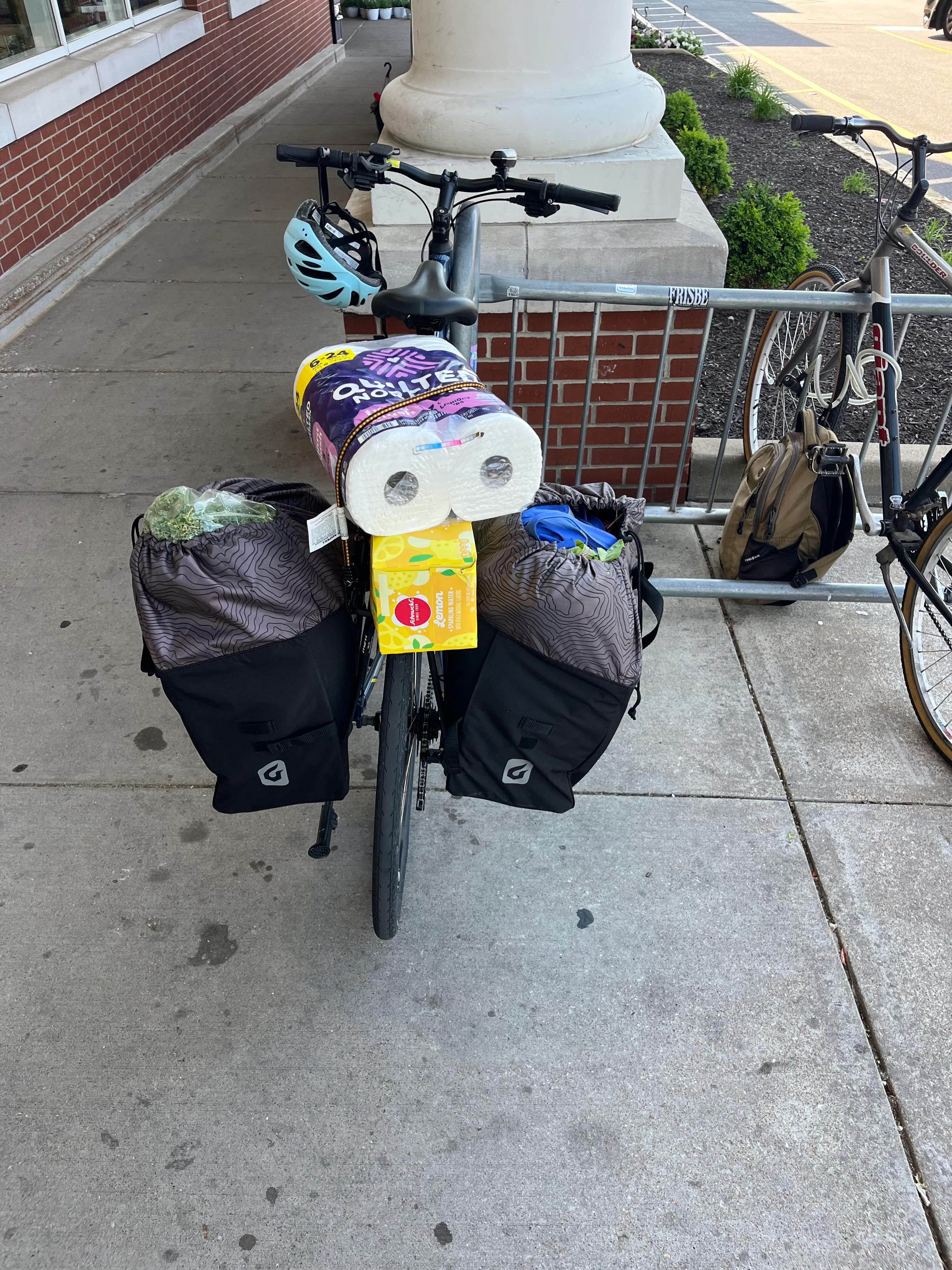
- The bike itself: I got a hybrid (flat handlebars, a little more upright than my road bike) on FB Marketplace for $300, but you can spend less than that at places like Bikeworks and Hobo Hub Works.
- A rack: I got mine at my local bike shop for $40, but I regularly see them on Marketplace for around $20. If you have a shop install it, that'll cost an extra $15-20.
- Panniers: These can be pricey, especially for the fancy waterproof ones! I got my grocery bag panniers at Sierra (like TJ Maxx for sports stuff) for about $30 apiece. They're not waterproof, but they do have a drawstring extension that allows you to pile a bunch of stuff above the height of the bag's walls. Very handy for chips an bread!
- Bungee cords: $10-$15 at your local hardware store for a big set. These let you get creative with what you pile on your rack! I bungee things like cases of seltzer, dog food, cat litter, and occasionally boxes of donuts.
- A good lock: This is essential! It's crushing to have your bike stolen, especially if you come out with a full cart of groceries! A good U-lock will probably run you about $40.
- A helmet: If you don't already have one, please get one! Urban cycling is doable and worthwhile, but there are also plenty of dangers, some of which you can't fully account for. A good helmet will probably run you about $70 retail, but Bikeworks often has them for much cheaper.